Locksmith in Hamilton, OntarioMaster keys, made simple.
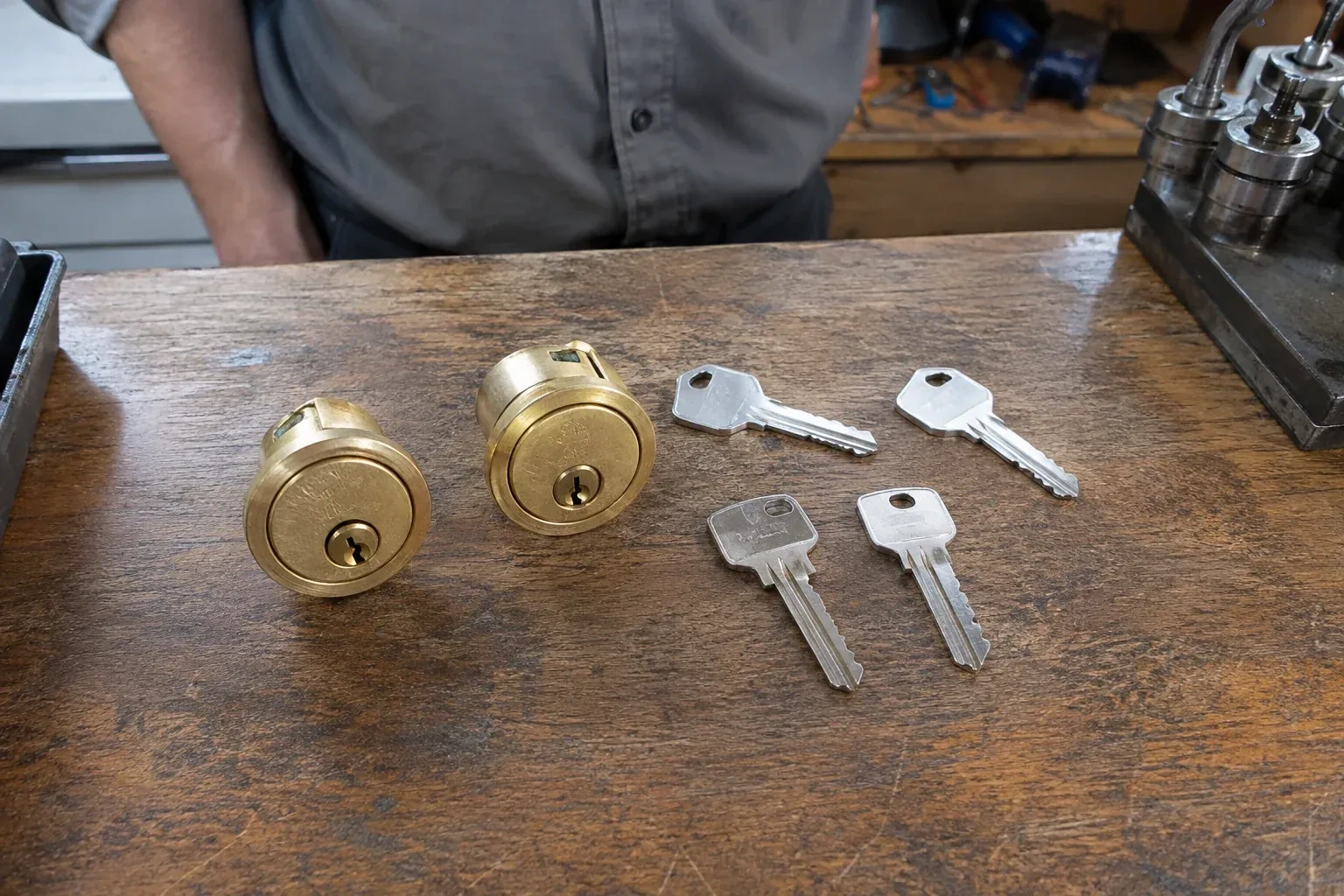
One key for the manager, one for each floor, one for the cleaners: a master key system puts order into a building's doors. We map who needs access to what, cut the system on quality cylinders, and document it so future changes are painless.
Many of our visits end without a new lock being sold, and we consider those good visits. A cylinder cleaned and re-lubricated, a strike shimmed, a hinge screw tightened, a key cut fresh from code: small work that makes a door feel new again. We are happy to replace hardware when it has worn out, but we would rather show you it has not.
A look before a verdict. We inspect the door, frame and lock before suggesting anything. Diagnosing from the driveway is how people end up with parts they did not need.
Two or three real choices. Where there are sensible alternatives we explain them side by side, including the option of doing less than you expected.
The job finished properly. Tested, aligned, cleaned up and demonstrated. We do not consider a lock done until you have turned the key yourself.
Open 24/7, same fees any hour. Call and tell us about the door.
18 years in business · Let's sort out your door: (289) 203-6954
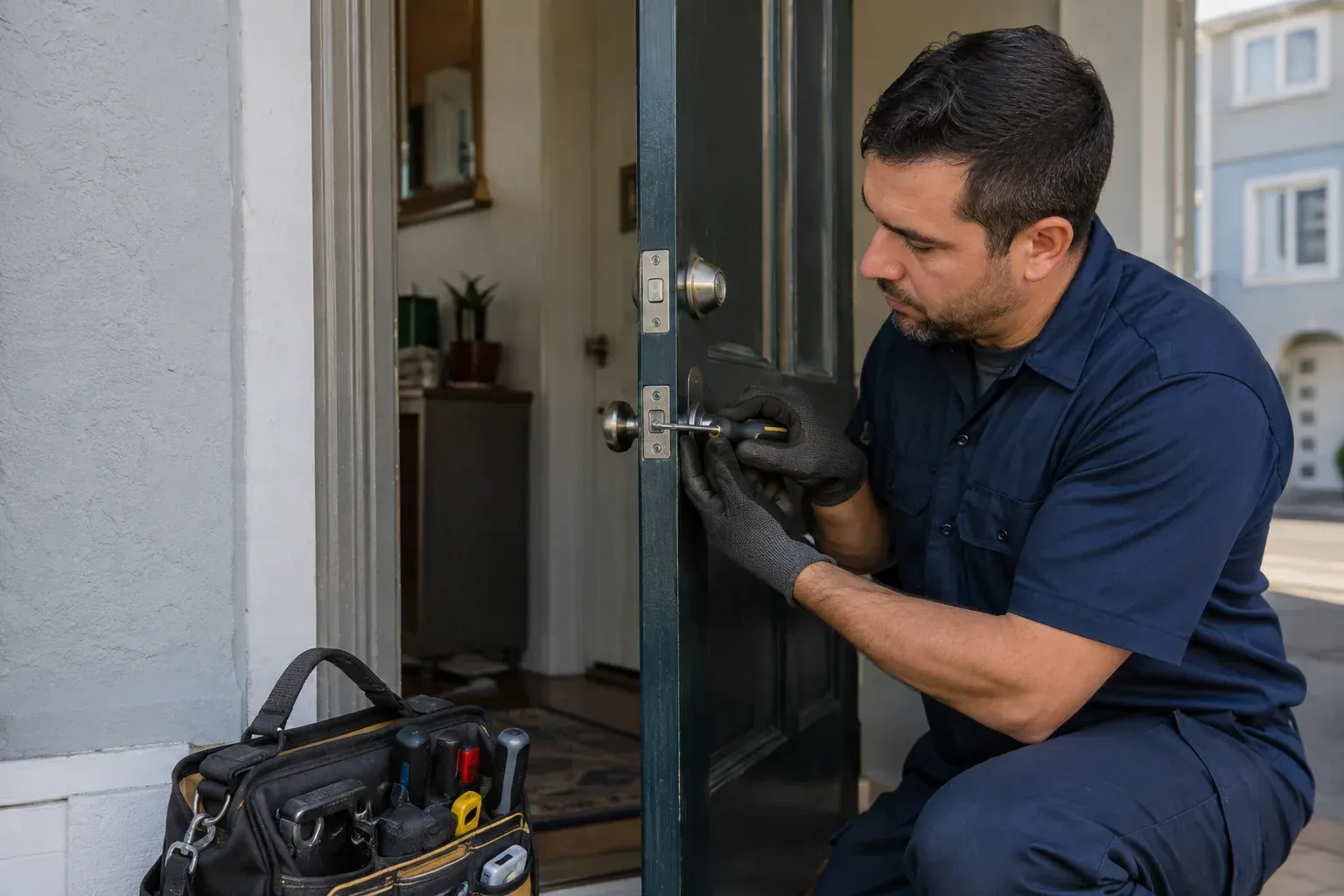
Home lockout service
Our locksmith services
Every service here is something we do week in, week out, not a line added to look thorough. If you would rather talk than read, the phone number at the top goes straight to someone who can tell you whether the job is a small fix or a planned visit.
Lockout ServicesBeing outside a locked door with a phone in your hand is the moment to call, not to try a credit card or a…
Lockout Services
Being outside a locked door with a phone in your hand is the moment to call, not to try a credit card or a…
The key you reach for. The door you come home to. Good locksmith work begins with understanding how you use them.
Job sheet1 of 3
Deadbolt Installation
The call
The back door has a deadbolt in name only: a short bolt, a thin brass strike held by two little screws, and a jamb you can flex with your palm. It was fine for a builder's showing.
A key turned up in the parking lot with the shop's name on its fob. It came back to you, which is lucky, but it means keys are leaving the building on rings you have never seen, and the shop's locks have not changed since opening day.
Three months of renovation are finally done. The kitchen looks wonderful, and along the way a general contractor, a tile installer, a plumber and an electrician each carried a key to your front door at one point or another.
Deadbolts differ in how far the bolt travels, how hard the bolt is, whether the cylinder guard spins free under a wrench and whether the housing shrugs off a hammer. High security deadbolts do well on all four, and we can show you the difference in hand.
You jiggle the key a little and the old deadbolt opens even when the cut does not look quite right. If your worn key can do that, you wonder what a stranger with the right tools could do.
The lever on the side door droops toward the floor and rattles in your hand. The latch no longer springs back on its own, so the door drifts open behind you unless you pull it shut and check it twice.
Someone tried the door last winter. The frame took it, but the strike plate is bent, one screw hole is stripped, and the bolt sits in the pocket at a slight angle.
The back door looks closed until you touch it. The edge is crushed where a bar went in, the latch is bent sideways, and the door swings free with a gentle push no matter how you turn the key.
High Security Locks. You jiggle the key a little and the old deadbolt opens even when the cut does not look quite right.
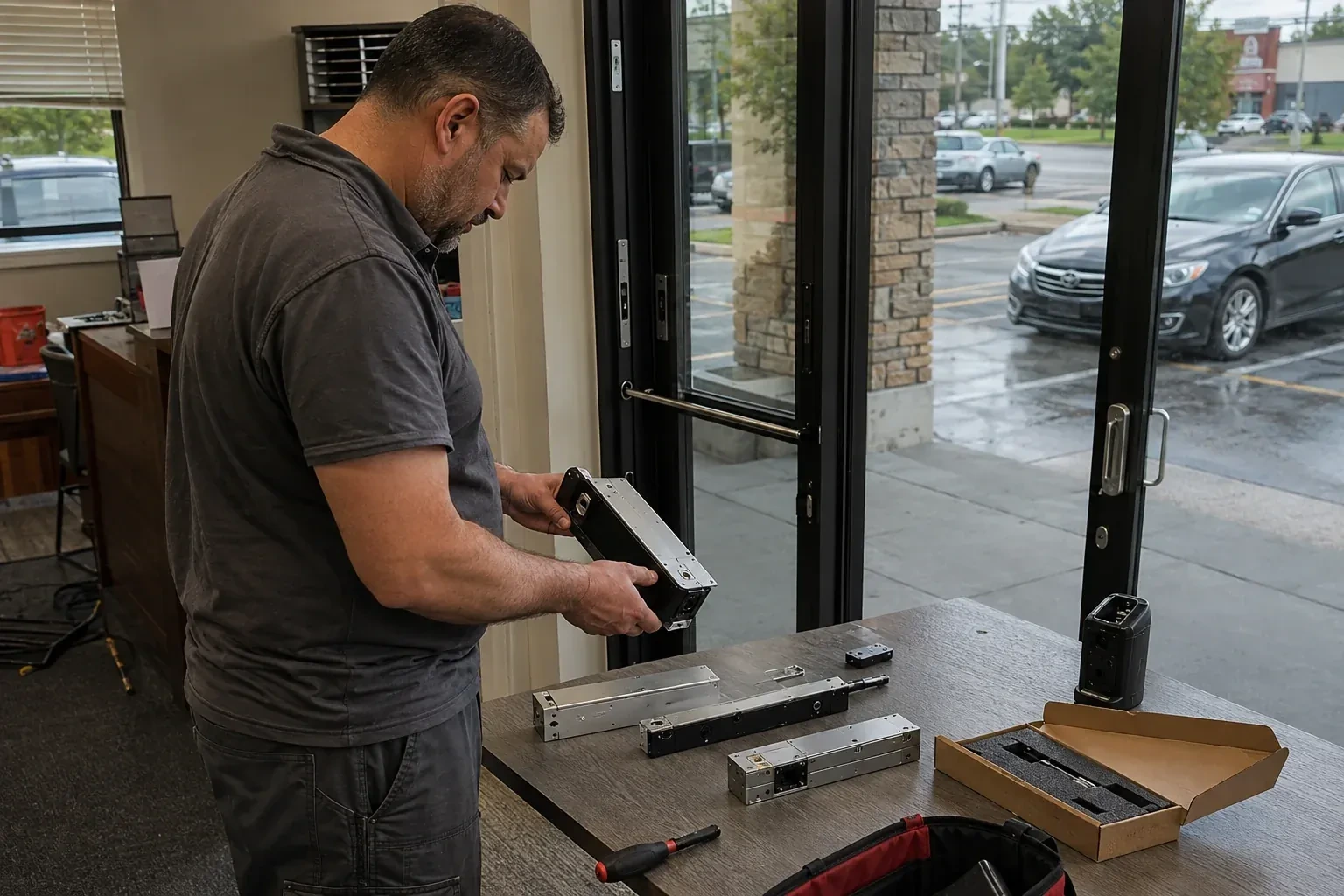
This group covers premises rather than homes: lockouts at the shop, rekeys after staff changes, master key systems, door closers, exit hardware and access control. We work around your trading hours where we can and explain each change before it is made.
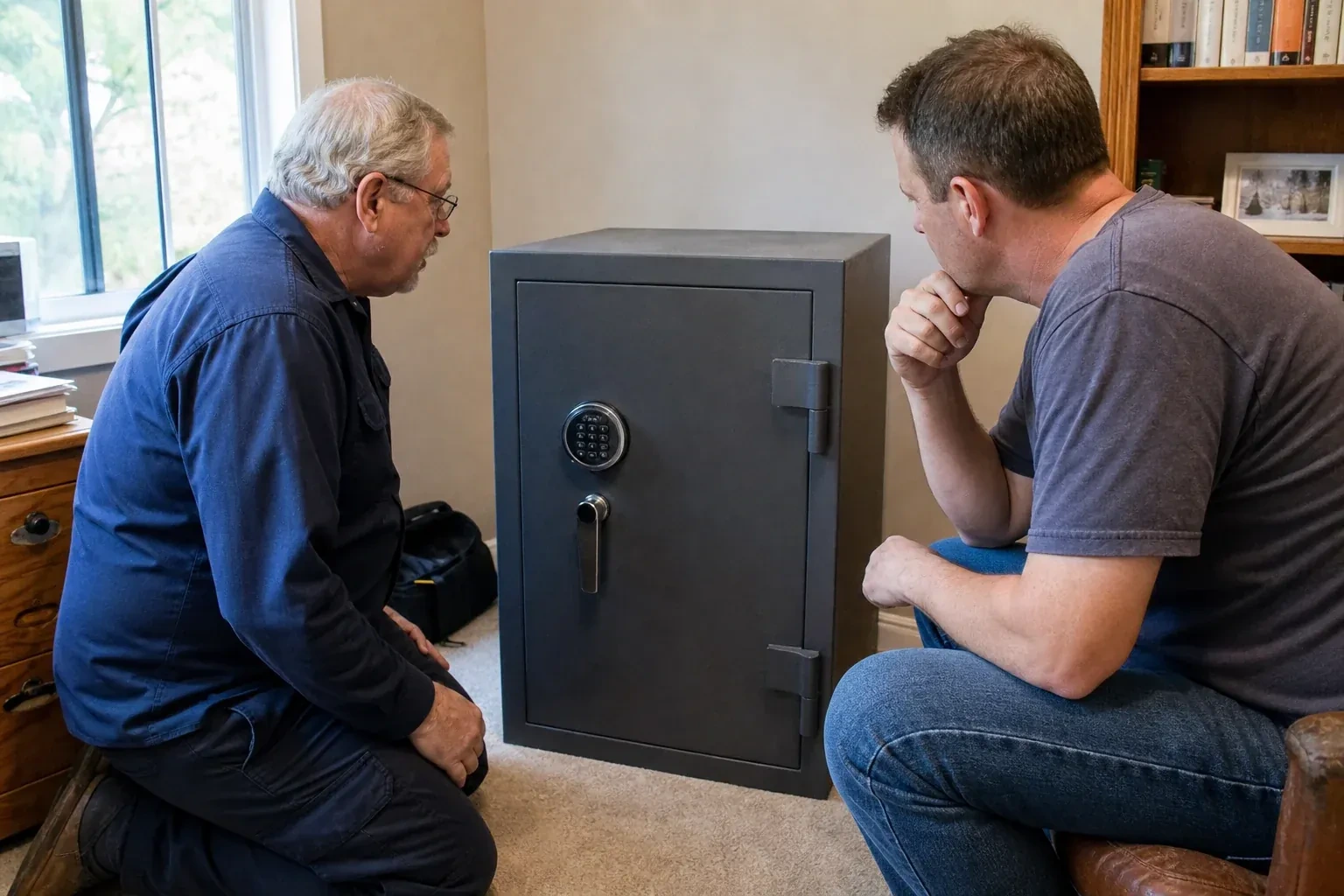
Changing a combination is not only for a safe that has stopped opening. Businesses routinely have a working safe recombined the moment someone who knew the old code leaves, retires or changes roles, because a combination known outside the…
If Your condo suite lock is builder's grade and feels flimsy.
Then Upgrade the deadbolt within the building's rules.
Most buildings allow a better lock in the same finish; we check with management first. Deadbolt Installation
If You lost the key to your mailbox in the lobby bank.
Then Have the mailbox lock replaced through management.
Lobby mail units belong to the building, so we arrange it with the property manager. Mailbox Lock Replacement
If Someone in the building has a key to your unit.
Then Rekey the suite lock.
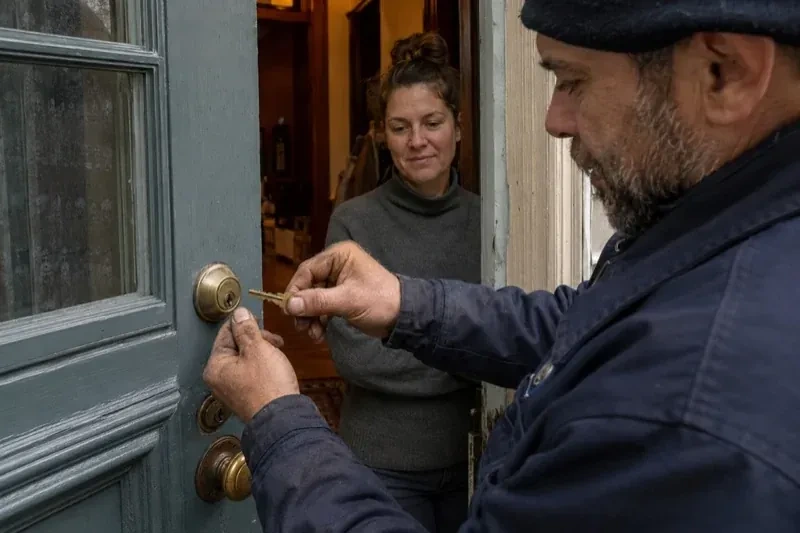
The cylinder is re-pinned so only your new keys work; any building access key is preserved. Lock Rekeying
Five scenes · open 24/7
How a visit goes
Many of our visits end without a new lock being sold, and we consider those good visits. A cylinder cleaned and re-lubricated, a strike shimmed, a hinge screw tightened, a key cut fresh from code: small work that makes a door feel new again.
Scene 1 of 5
Call and describe the door
On our way
A look before a verdict
Two or three real choices
The job finished properly
Step 1 of 5
Call and describe the door
Describe the property, the hardware and what has changed, and the visit starts from what you have seen.
Step 2 of 5
On our way
You tell us what is happening with the door, who has keys and what you would like to be different afterwards. We ask a few questions so we arrive with the right parts.
Step 3 of 5
A look before a verdict
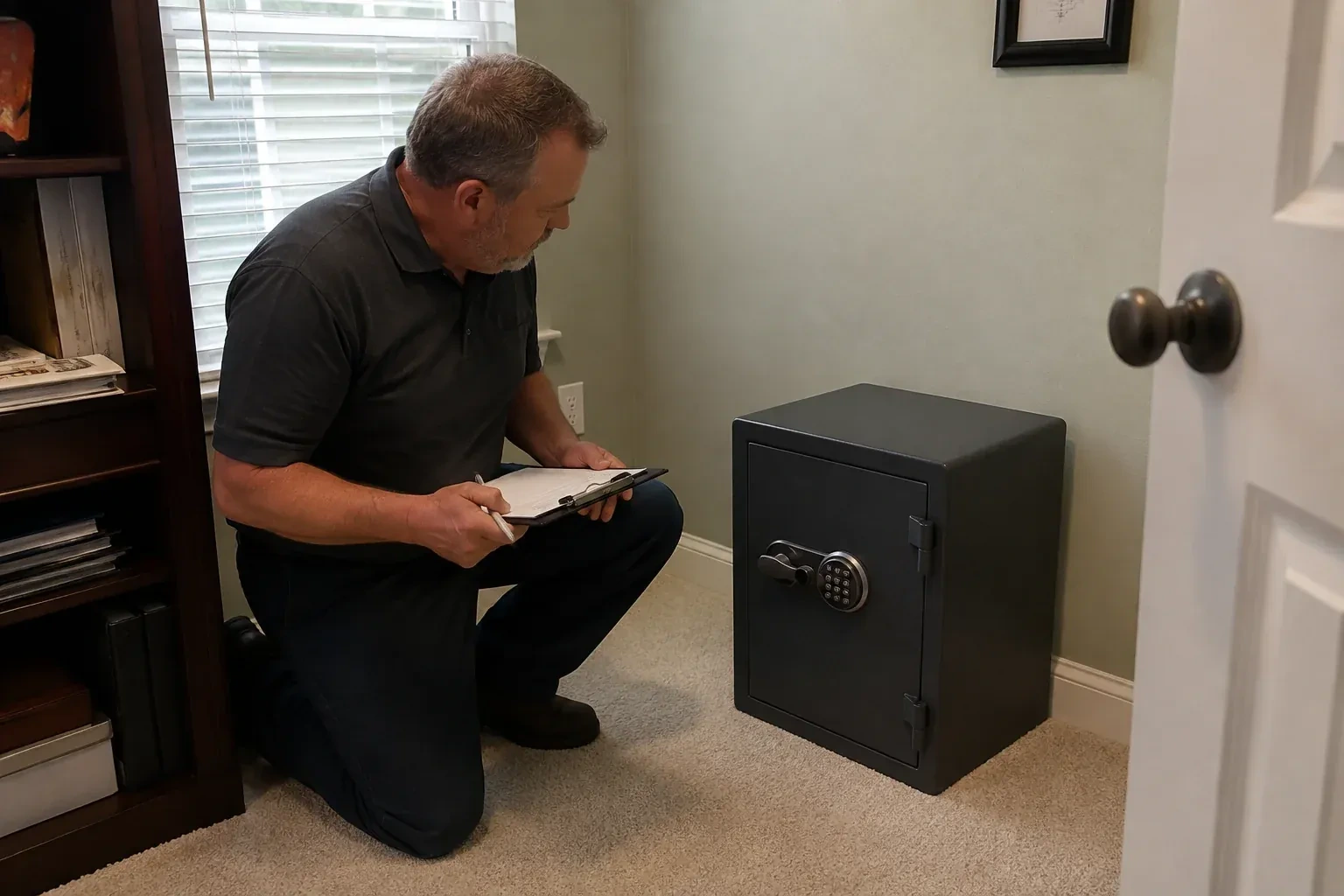
We inspect the door, frame and lock before suggesting anything. Diagnosing from the driveway is how people end up with parts they did not need.
Step 4 of 5
Two or three real choices
Where there are sensible alternatives we explain them side by side, including the option of doing less than you expected.
Step 5 of 5
The job finished properly
Tested, aligned, cleaned up and demonstrated. We do not consider a lock done until you have turned the key yourself.
About 61% of homes in Hamilton were built in 1980 or earlier, according to the 2021 Census.Old brass keys wear thin, and a key that has bent for years finally lets go in a cold cylinder. In older housing stock this is a regular call, so the locksmith is ready to extract the piece, check the cylinder and cut a new key from the code.
Single-detached houses make up about 56% of homes in Hamilton (2021 Census).Where houses and attached homes share an area, lockouts are as varied as the doors. A porch, a hallway or a shared vestibule each calls for a slightly different approach, and a locksmith used to all three arrives ready for whichever it is.
Ancaster Heights Locksmith Pros(289) 203-6954 · open 24/7
What happens to the old lock?
It is yours. Some people keep a sound old cylinder as a spare or move a decent deadbolt to a shed or garage door, and the locksmith can rekey it to the house key for that purpose. Worn or damaged hardware is taken away for recycling if you prefer. Either way, the old keys should be gathered up and discarded so nobody confuses them with the new set.
How long does a lock replacement take?
A straightforward like-for-like deadbolt or knob set on a standard door is often a matter of an hour or less including testing. Add time for a reinforced strike, for keying several locks alike and cutting keys, for a smart lock's setup and pairing, and for repairing a split jamb or adapting an older door. When several entrances are done together, the locksmith gives a realistic window before starting so you can plan the day.
Which finishes stand up to salt and winter?
Finish is one of the three categories on the residential hardware label, and it covers exposure to sun, humidity, salt and skin oils. In practice, PVD brass, satin nickel and stainless finishes tolerate a salted driveway well, powder-coated black holds up when it is not chipped, and traditional lacquered brass tends to bloom green where salt reaches it. A storm door or a small overhang helps any finish, and wiping salt off in a thaw helps more.
What is bumping, and does this stop it?
Bumping uses a specially cut key that is struck while under light turning pressure, bouncing the pins to the shear line for an instant so an ordinary cylinder opens. It works on many standard pin tumblers. A high security cylinder needs its sidebar released by separately positioned finger or rotating pins at the same moment, and a bump key cannot set those, so the plug stays locked. It is one of the clearest advantages of the upgrade.