Sound familiar?Hamilton
- The call
- They did not get in. The attempt left a screwdriver gouge in the door edge, a strike plate bent outward and a deadbolt that now needs a shove to throw. The lock held, but the door is telling you it was tested.
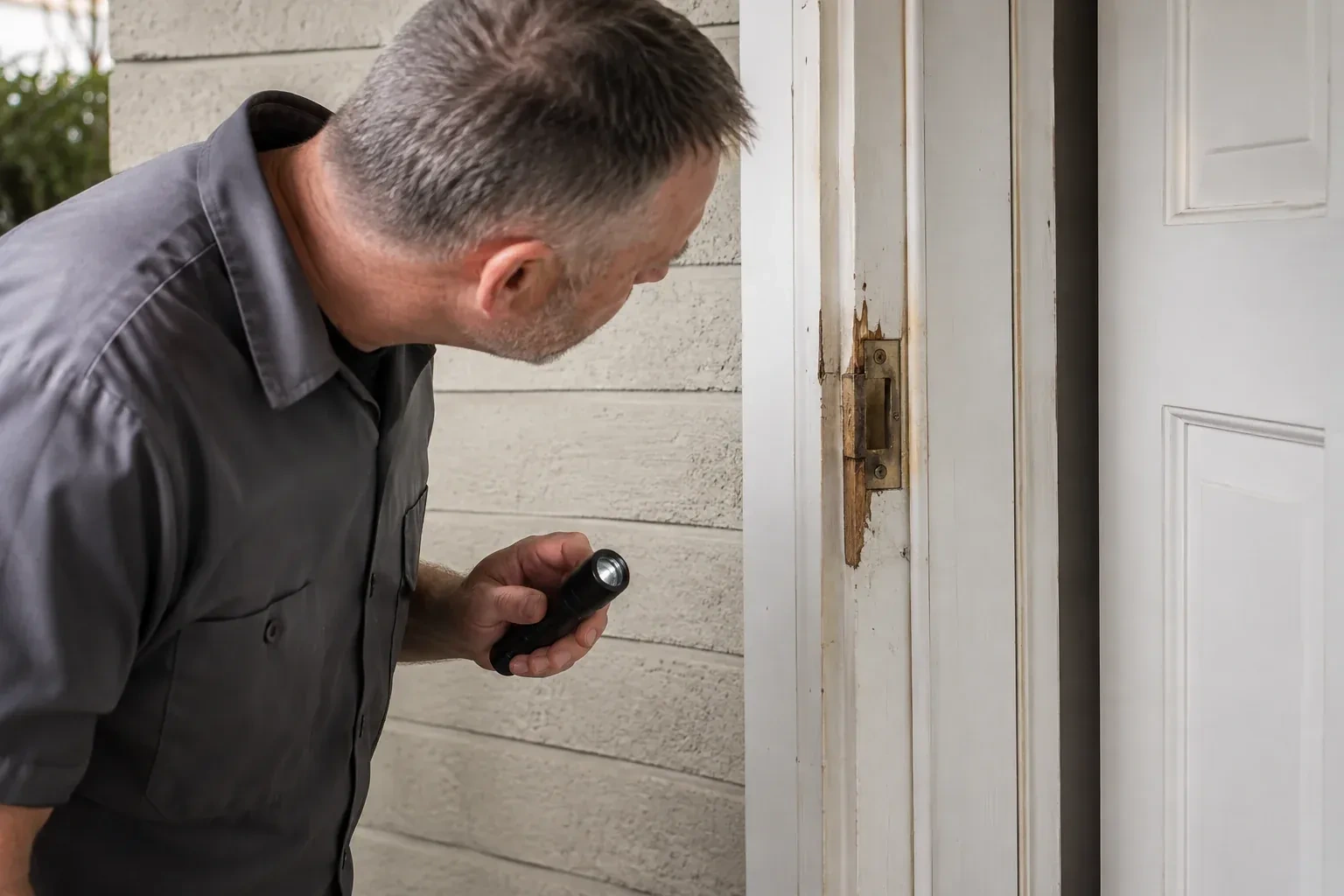
The back door looks closed until you touch it. The edge is crushed where a bar went in, the latch is bent sideways, and the door swings free with a gentle push no matter how you turn the key.
A break-in repair happens alongside a police file and an insurance claim, and a good locksmith keeps both in mind. Before any hardware is moved the damage is photographed as found: door face, edge, strike, jamb, hinges and glass. The old parts are kept for the adjuster unless you prefer otherwise, and the written record at the end lists what was broken, what was replaced, what was reinforced and what is left for another trade. Insurers ask policyholders to document losses, keep damaged property and keep receipts, and this visit produces all three. You choose who does the repair; the locksmith makes it easy to show what it took.
Sound familiar?Hamilton
Break-In Damage Lock Repair · Hamilton
Scene 1
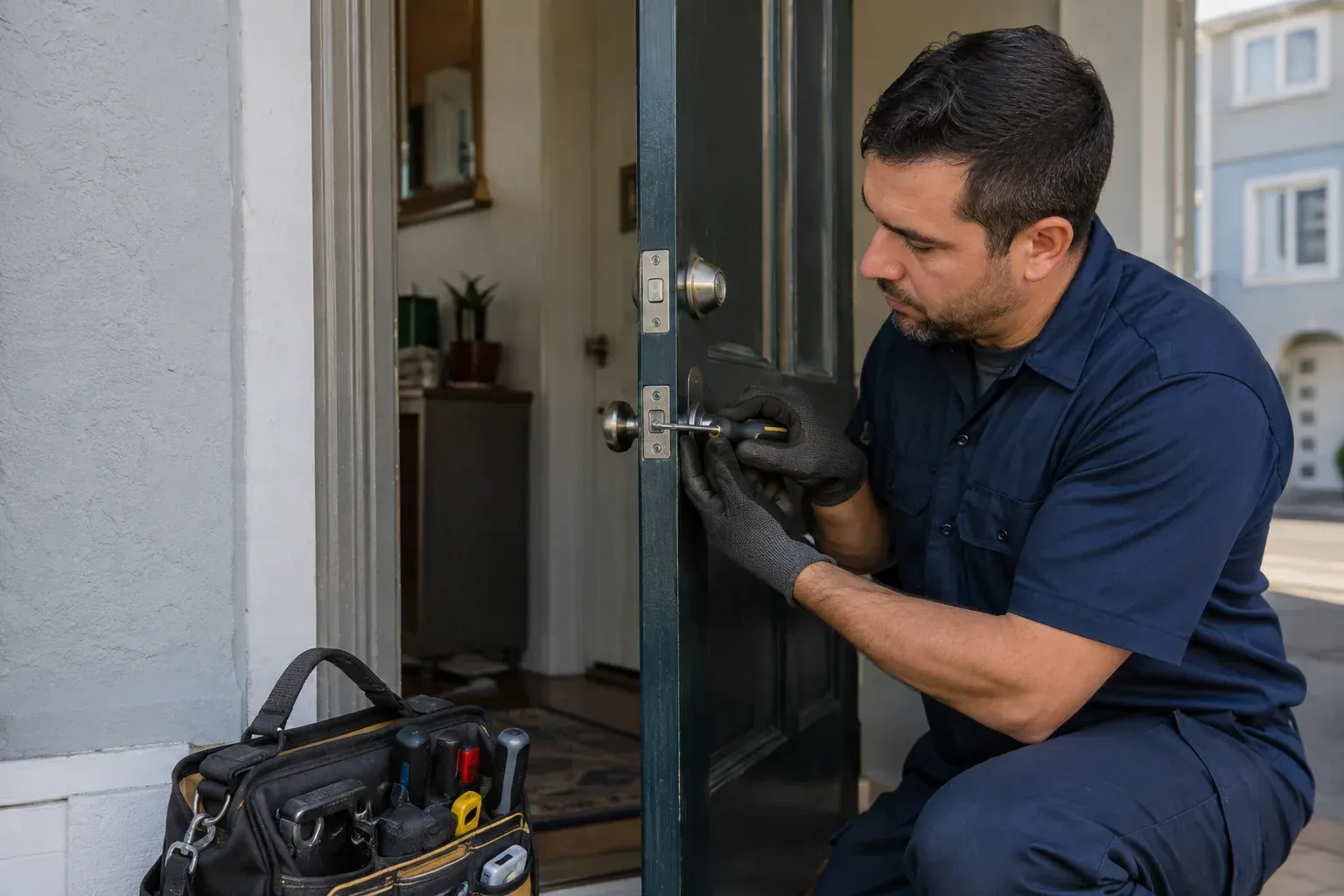
An impact hard enough to break a strike usually moves the door as well. The locksmith checks that the door sits square in its opening, closes on its weatherstrip without force, and that the bolt lines up with its pocket rather than dragging on the strike lip. Hinge screws are tested for grip, since a kick can pull them from the jamb even on the side that was not attacked, and the hinge leaves are checked for bending. Manufacturers treat strike position, pocket depth and door alignment as working parts of the lock, and a repair that ignores them produces a door that locks badly the day after it was fixed.
Scene 2
Where a pry bar crushed the edge or the wood split around the lock bore, a wrap-around reinforcer is fitted: a steel channel that sleeves the door edge at the lock, ties the two faces together and gives the bolt and latch a solid seat. On the hinge side, the short factory screws are swapped for three-inch screws that reach the framing, and a bent hinge is replaced. Doors that were kicked hard sometimes need a hinge reinforcement plate across the jamb to spread the load. With both edges strengthened, the door no longer has a soft side, and a future kick meets steel and stud at every point that matters.
Scene 3
Locksmith hardware fixes a great deal, but a shattered frame, a broken door slab or a smashed sidelight belongs to a carpenter, door installer or glazier. When that is the case you leave with the opening secured, a clear list of what the other trade needs to do, and hardware chosen so it transfers to the new frame or door rather than being bought twice. The temporary securing is designed to hold comfortably until that work is booked. Insurers let you choose your own contractor, so the list is written for whoever you pick, and the locksmith is available to fit the final hardware once the woodwork is done.
What shapes the quoteAncaster Heights Locksmith Pros
FeesSame any hour
A security strike is a heavier plate with a formed steel pocket that wraps around the bolt instead of leaving it in bare wood. It is set into the jamb and fixed with long screws, typically three inches, that pass through the jamb and the shim space into the framing, with the longest screws placed nearest the door stop where the bolt bears. Manufacturers specify the pocket depth so the bolt extends fully. The result spreads a kick across the wall stud rather than two small screws.
It is the natural moment, because the door is already open for repair. A deadbolt with a full one-inch throw, a hardened insert against sawing and a low-profile face that resists a wrench grip, graded to a recognised durability standard, takes little extra effort to fit now compared with a return visit. Pair it with the reinforced strike and long screws and the door becomes hard to attack from any side. The choice is yours; the locksmith shows the options and lets you decide.
Mostly not. A boxed strike sits flush in the jamb, long screws hide behind hinge and strike plates, and a repaired jamb is filled and dressed so paint or stain covers it. A wrap-around door edge reinforcer is the one part that shows, as a slim steel band at the lock, and it can be finished to match the hardware. New deadbolts are matched to the trim on your other doors where you want them to blend in.
HamiltonOntario
Break-In Damage Lock Repair · Ancaster Heights, Clearview Estates, Dancaster Courts, Greenside Acres, Harmony Hall II, Highland Park Survey, Maple Lane, Maple Lane Annex, Maywood, Mineral Springs, Mohawk Meadows, Nakoma, Oakhill, Parkview Heights, Perth Park, Pinecrest, Pleasant Valley, Spring Valley
Every square is one home in a hundred.
On-site assessment
The back door looks closed until you touch it.
(289) 203-6954, open 24/7.
On-site assessment preferred · (289) 203-6954, open 24/7