Advice is only useful when it fits your door, so we have kept these notes practical and specific. Real situations, real hardware, what to check and what to leave alone. Read what applies today and come back when the next question turns up.
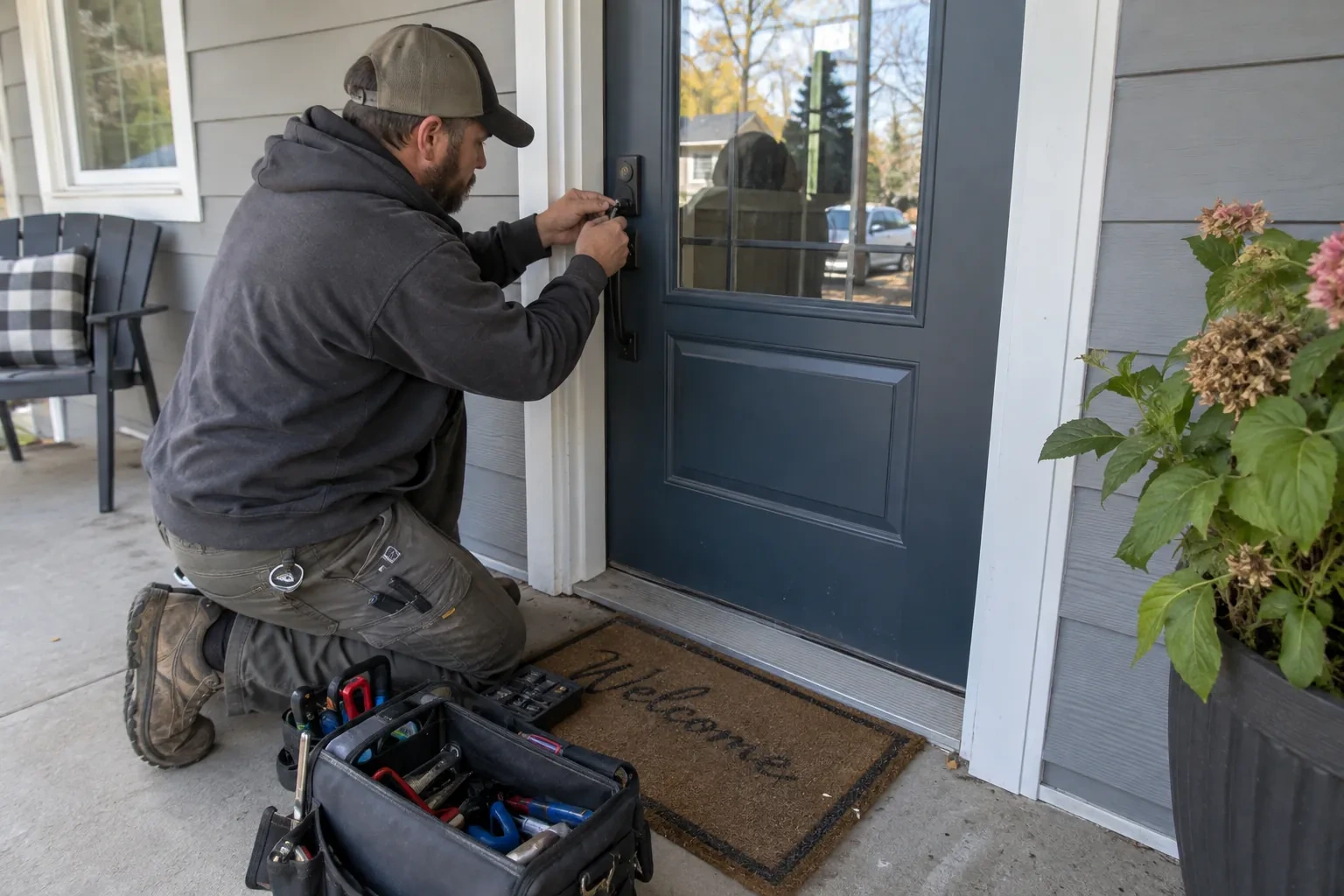
- Bulletin 1Break-In Damage Lock Repair: comparing quotesMost forced doors lock again during the visit. If the slab and frame are sound, a new lockset goes in and the strike is reinforced.Read
- Bulletin 2Broken Key Extraction: what the visit coversTwo facts shape the job before the locksmith arrives: whether the door is locked or unlocked, and whether any of the key is showing. A fragment that protrudes can often be gripped and drawn straight out.Read
- Bulletin 3Commercial-Grade Lock Replacement: before you callOvernight someone forced the back door, and the cylinder face is scarred, the metal around the strike has pulled loose from the frame, and the latch no longer sits flush.Read
Your questions, our answers
Lockout Services
Can you also open a storm door, garage side door or backyard gate?
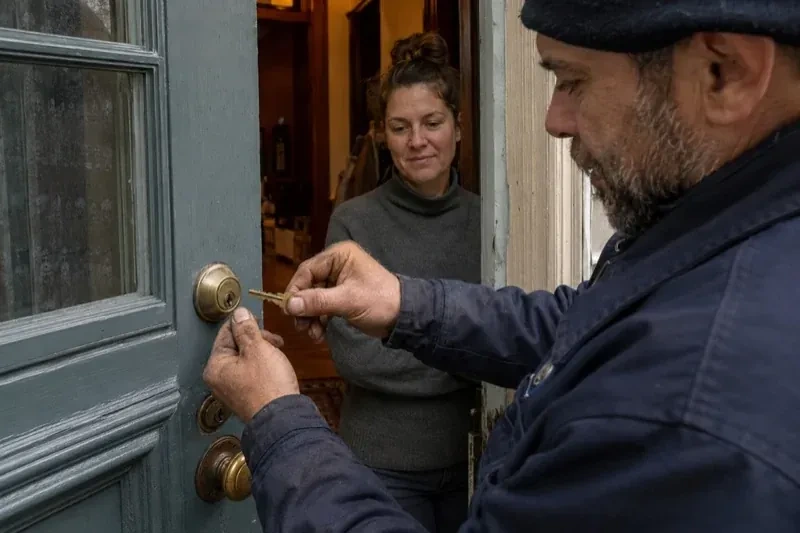
Yes. The same skills apply to any residential lock: a storm door that self-latched on the porch, the man-door into the garage, a shed, a gate with a padlock or a keyed latch, and a mailbox or storage locker in a condo building. Tell the locksmith about every opening involved so the right tools are in the van. Several small locks opened in one visit is common, especially after a move when keys were never handed over. Home Lockout Service
Can you open a door that has a push bar on the inside?
Yes. From outside, an exit device is operated through its trim, which may be a keyed lever, a pull with a cylinder or a bare rim cylinder. Depending on the trim fitted, picking or decoding that cylinder either retracts the latch directly or unlocks a lever, knob or thumbpiece that then has to be turned to let the latch go. The bar, rods and dogging feature stay as installed for the emergency way out, and the bar is pressed afterward to confirm it releases the latch with one push. Business Lockout Service
Can a new key be made from the two broken halves?
Usually. Laid end to end, the halves show the full set of cuts and identify the blank, and a locksmith reads them with a gauge and cuts a fresh key to those depths on a code machine. That is better than tracing the broken blade on a duplicator, because a worn key copied is a worn key repeated. If a spare or the key code exists, that is used instead. Broken Key Extraction
What is a security strike box and why fit one?
A security strike is a heavier plate with a formed steel pocket that wraps around the bolt instead of leaving it in bare wood. It is set into the jamb and fixed with long screws, typically three inches, that pass through the jamb and the shim space into the framing, with the longest screws placed nearest the door stop where the bolt bears. Manufacturers specify the pocket depth so the bolt extends fully. The result spreads a kick across the wall stud rather than two small screws. Break-In Damage Lock Repair
Change or Rekey Locks
Do the old keys really stop working?
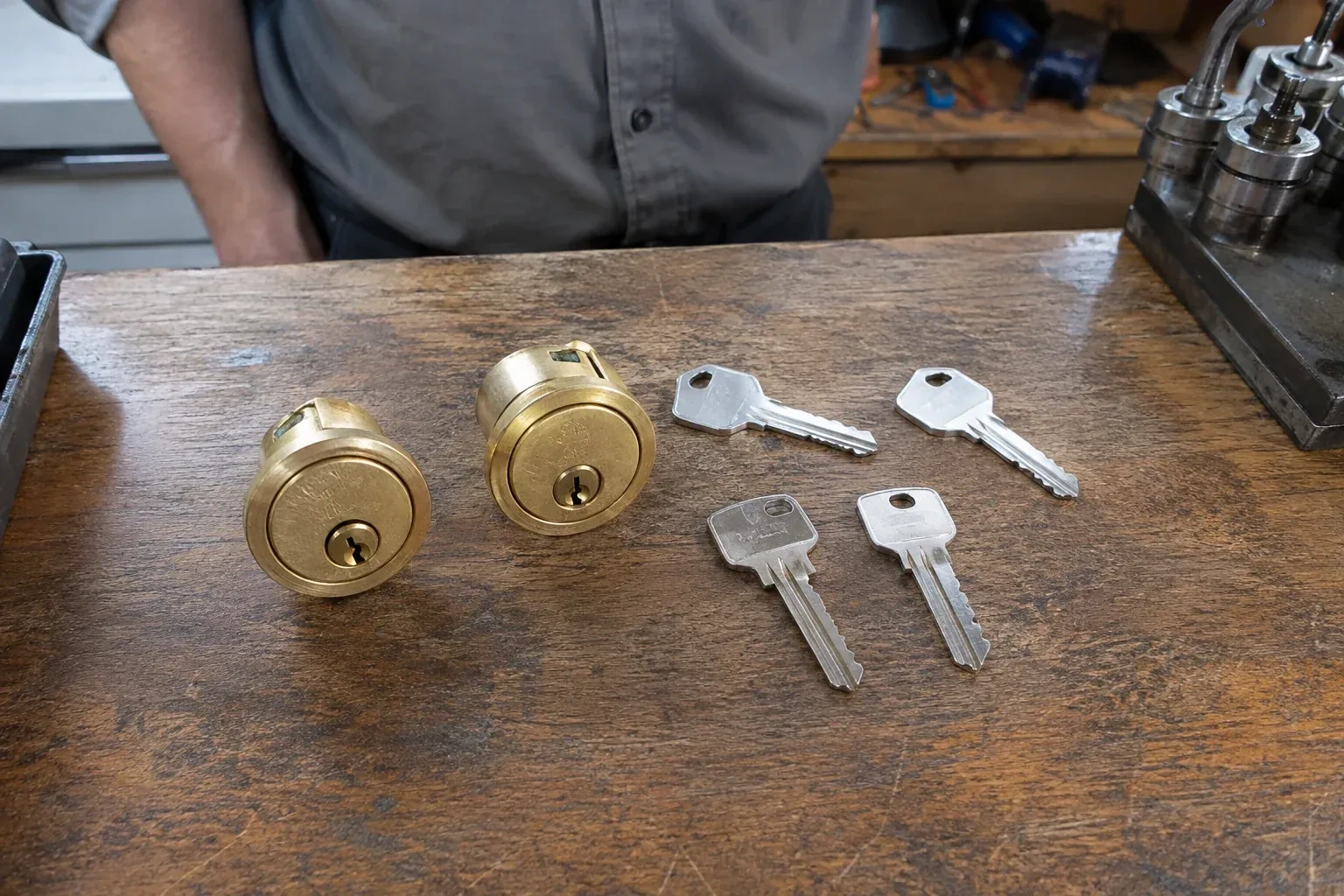
Yes, at every cylinder that was rekeyed. Once the bottom pins are changed, a key cut to the old combination lifts them to the wrong heights and the plug will not turn. The locksmith proves this at each door by trying the old key after the new one, because any door missed from the list would still answer to the old key. That is also why the walk around the property at the start matters: every door meant to be included has to be on the list. Lock Rekeying
How long should the bolt be?
The bolt should extend at least 25 mm into the frame, which is the standard throw for a dwelling's entrance doors and the length most residential deadbolts provide. Part of the bolt stays inside the door for support while the rest sits in the pocket. A hardened steel insert that spins under a saw blade is a common feature worth having on doors that face a street or laneway. Deadbolt Installation
Do I have to prove I own the home before you change a lock?
The locksmith will ask, and it is a sign of a careful trade. Photo identification with the address, a deed or property tax notice, or a mortgage or insurance document is plenty for an owner. Tenants show a lease and the landlord's consent; landlords show ownership and confirm the tenant will receive keys. It is a short step that protects everyone with a right to that door. Lock Replacement & Upgrade
Can a modern cylinder be fitted to my old mortise lock?
Often, on cases that already take a threaded cylinder. Mortise cylinders are made in standard thread sizes and lengths with different cam shapes, and a new one is selected to match the case and the door thickness. That gives you keys cut on a machine and the option of keying the door alike with the rest of the house. A bit-key case has no cylinder to swap; its keys are made on the bench instead. Vintage Mortise Lock Service
High Security Locks
Should I change my safe's combination even if it still opens fine?
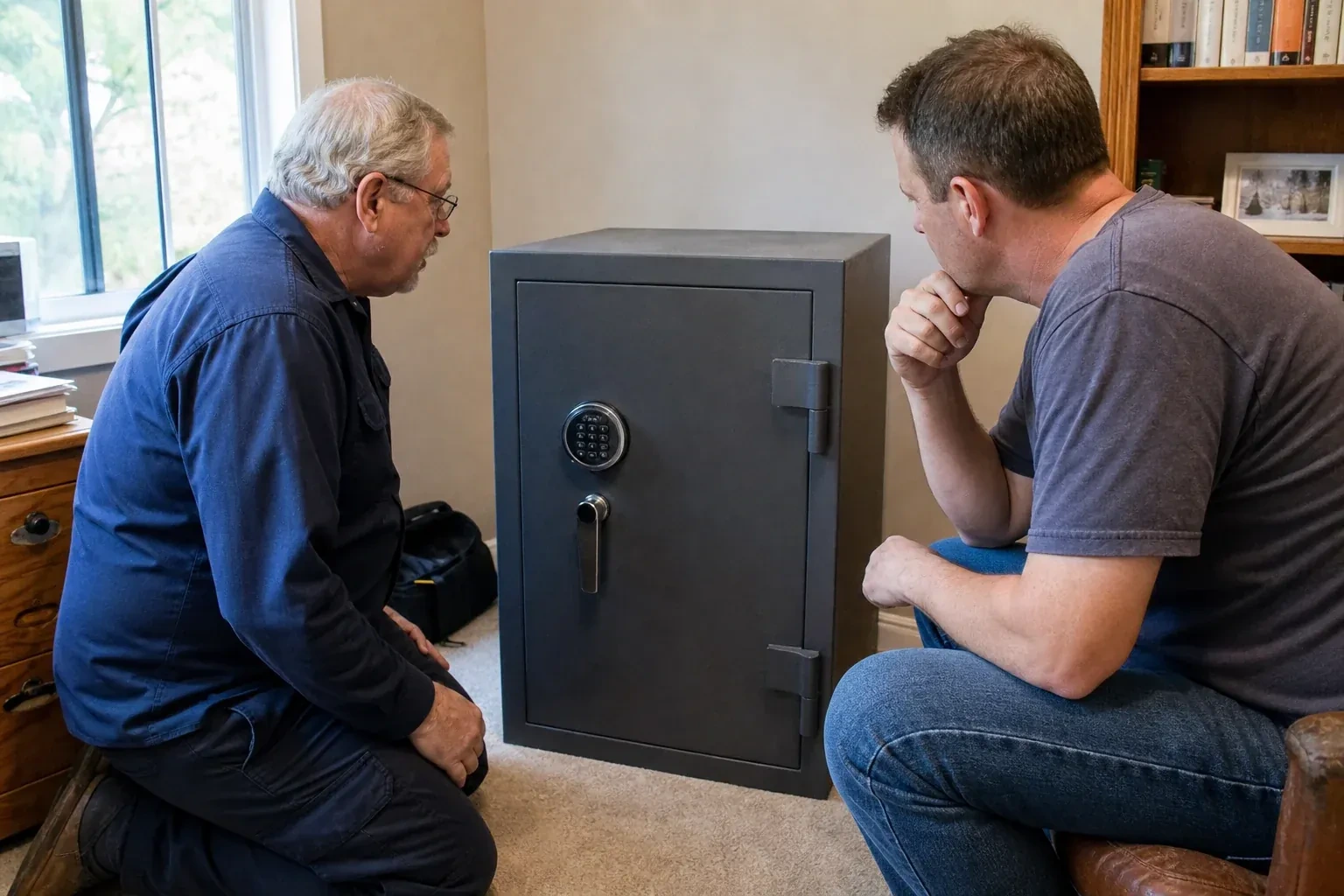
It depends on who still knows the old one. If a bookkeeper, manager or previous owner who had the combination is no longer with the business, resetting it closes that gap even though nothing about the lock itself has failed. A safe that only the current staff have ever known the code to generally does not need changing on that basis alone. Safe Opening & Combination Change
Will anchoring damage my flooring?
Anchoring leaves small holes at the anchor points, sized to the bolts being used, and on a finished floor these sit under the safe itself where they are never seen again. On tile, the risk of cracking nearby tiles is real enough that an alternative fastening point or a different spot in the room is often chosen instead of drilling straight through the tile itself. Safe Installation & Servicing
What is bumping, and does this stop it?
Bumping uses a specially cut key that is struck while under light turning pressure, bouncing the pins to the shear line for an instant so an ordinary cylinder opens. It works on many standard pin tumblers. A high security cylinder needs its sidebar released by separately positioned finger or rotating pins at the same moment, and a bump key cannot set those, so the plug stays locked. It is one of the clearest advantages of the upgrade. High Security Locks
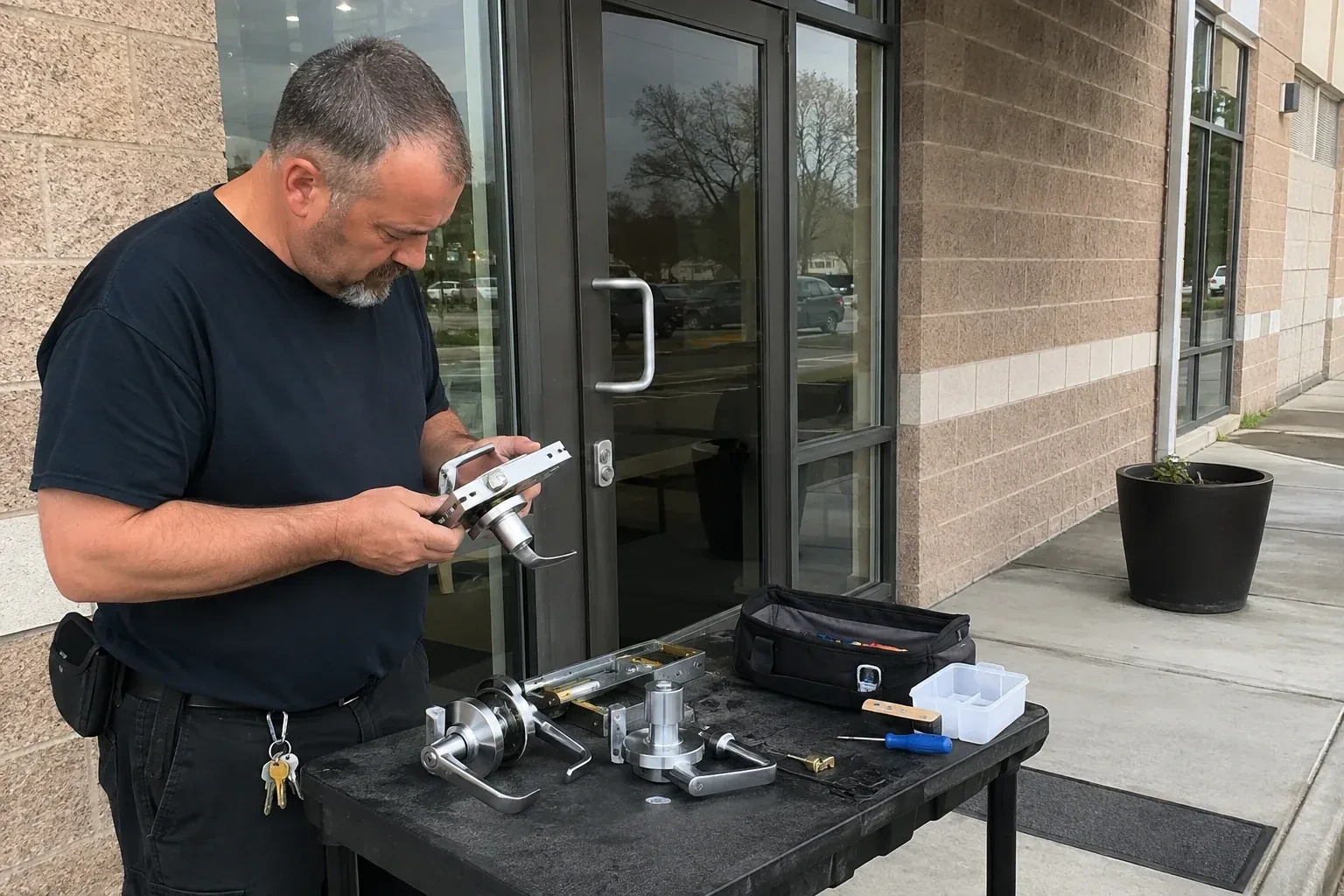
Commercial Locks
Can all our doors be put on a single key?
Yes, if the cylinders share a keyway or can be fitted with ones that do. Keying everything alike is popular with small shops because staff carry one key and spares are simple. The trade-off is that one key then opens the cash room as readily as the front door. Many businesses choose a middle path: the doors everyone uses on one key, the sensitive rooms on another, and an owner's master that opens both. Commercial Rekeying
What happens if a department splits or a business reorganizes?
The existing chart is the starting point rather than a blank page. Doors that move to a new department are reassigned within the existing hierarchy where the cylinders and platform allow it, and only the affected levels are touched. A reorganization is usually an adjustment to the record, not a reason to rebuild the whole system from the ground up. Master Key System Design
What happens at a networked location if the network or Wi-Fi goes down?
A standalone reader at a single door keeps working during a network or Wi-Fi outage, since it checks its own stored list rather than relying on a live connection. A networked controller generally keeps making local decisions at each door as well, though live updates, remote changes and off-site log access may pause until the connection returns. Access Control Installation
Can one visit cover several doors in the same building?
Yes, and it is common. A building rarely has only one exit affected by an occupant-load or fire-rating question; stairway doors, assembly-room exits and any doors altered together during a renovation are usually assessed and fitted in the same visit, with one written record covering every device installed across the building. Panic & Exit Hardware
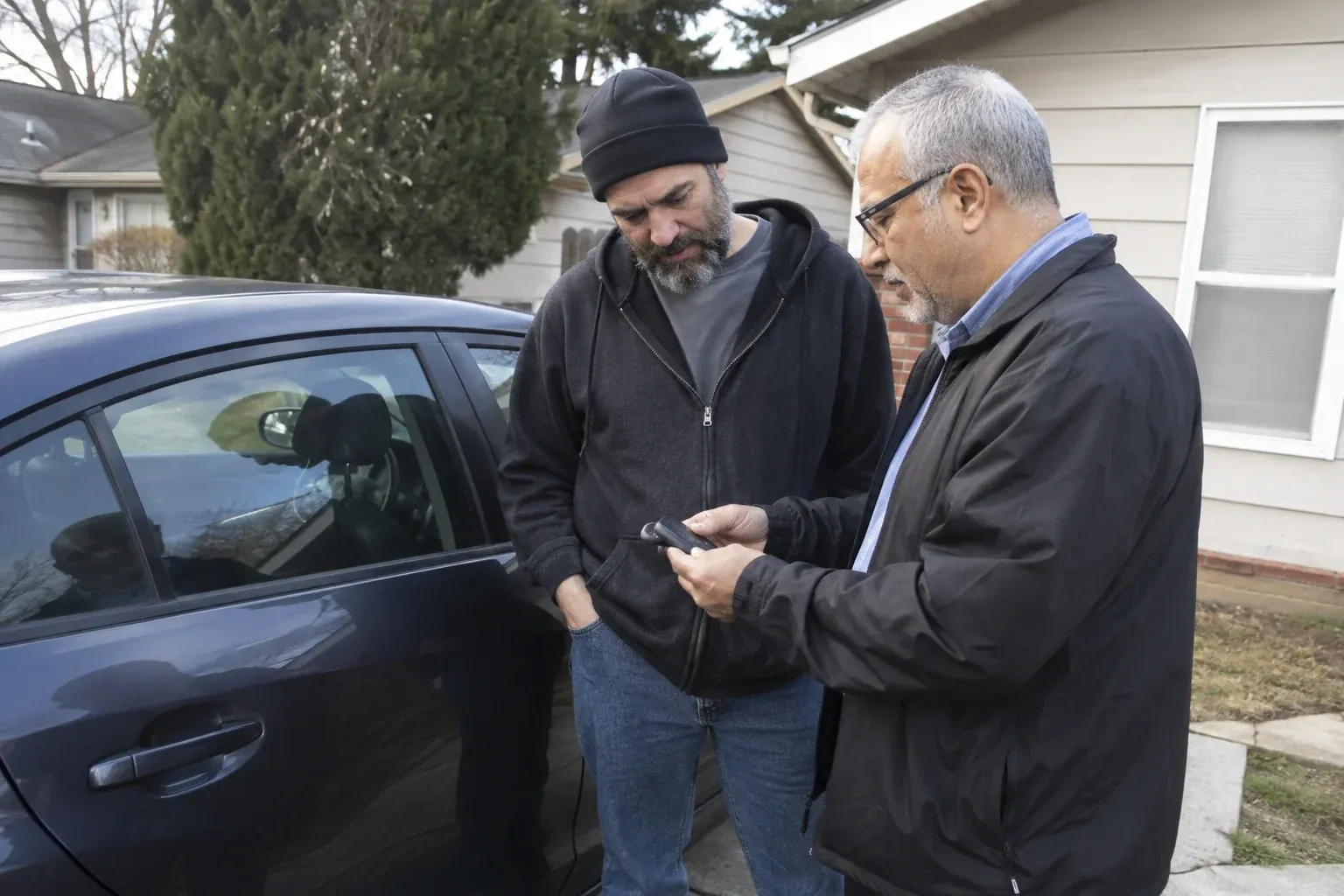
Car Keys
Will opening the car damage the paint, the door or the seal?
A professional opening leaves nothing behind. Door-edge guards sit between tools and paint, the air wedge is inflated in small steps so the frame flexes evenly and returns to shape, and the reach tool is padded. Where the car has a door cylinder, a matched pick-and-decoder turns it exactly as a key would. Any mark already present is pointed out before work begins, and the door, glass and seal are checked over at the end. Car Lockout Service
Does the car have to be towed to a shop?
Often not. The cutting machine, blanks and programming tool travel in the van, and the work is done where the car sits: a driveway, a parking garage, the roadside or a workplace lot. The locksmith connects to the diagnostic port under the dash and cuts and programs on the spot. An unsupported or dealer-only system may still need the vehicle to go to a dealer or a suitably equipped shop, which the VIN check flags beforehand. Car Key Replacement
What identification do I need to bring for a vehicle that isn't mine, like a company car?
Bring whatever document shows your connection to the vehicle in that situation: a company letter or fleet record for a workplace vehicle, a lease agreement for a rented one, or a note from the registered owner for a family member's car. The locksmith is confirming that the person asking for a key is entitled to hold one, which protects the vehicle's owner as much as it protects you. Spare Car Key Duplication
How many fobs can be registered to one vehicle?
This depends on the manufacturer, since each vehicle's memory has a set limit built in, commonly enough for several drivers plus a spare. The visit checks how many the specific vehicle allows and how many are already registered, so a household adding another driver knows whether there is room before a new fob is ordered. Key Fob Programming