Sound familiar?Hamilton
- The call
- The back door has a deadbolt in name only: a short bolt, a thin brass strike held by two little screws, and a jamb you can flex with your palm. It was fine for a builder's showing. It is not fine for a laneway.
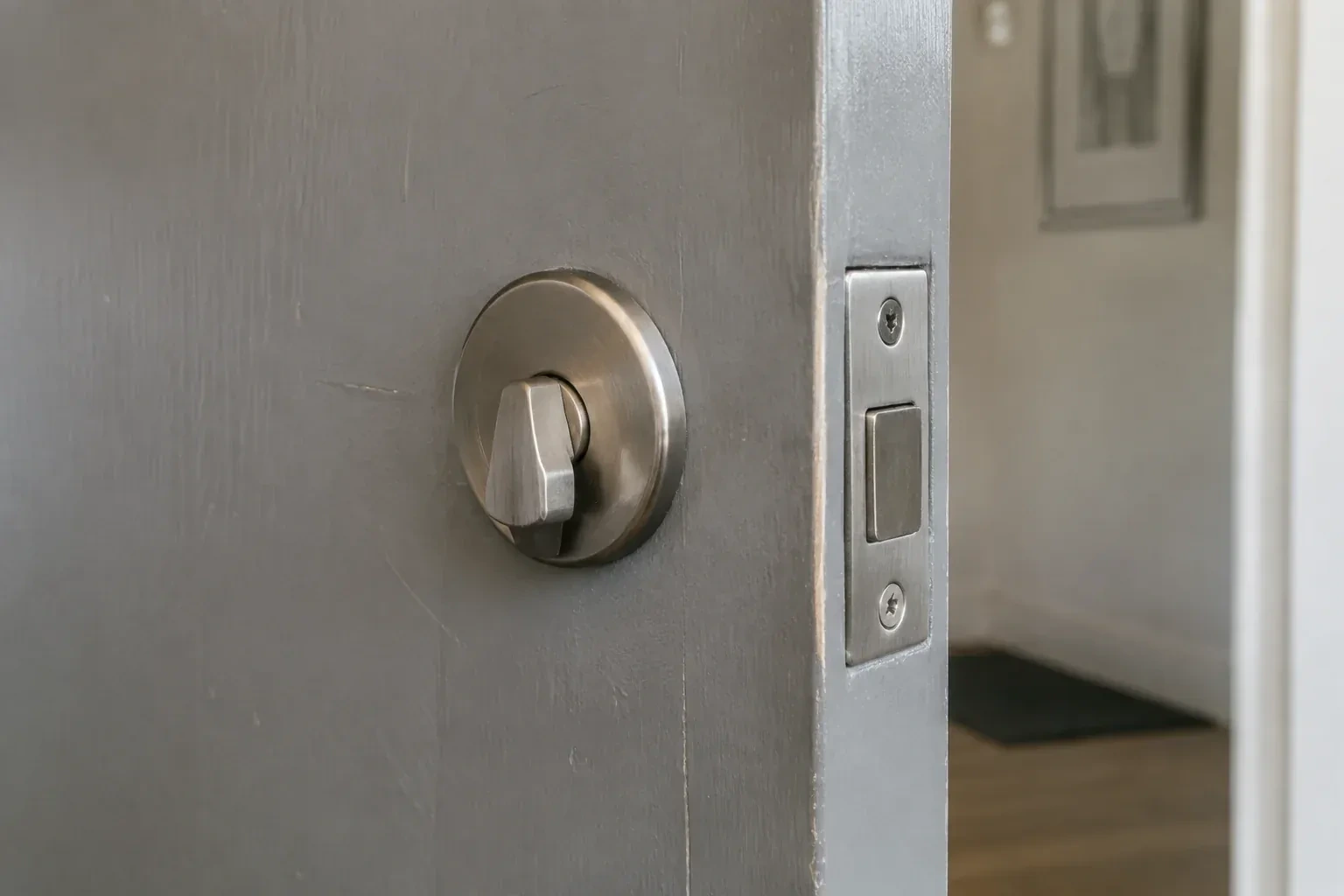
Someone tried the door last winter. The frame took it, but the strike plate is bent, one screw hole is stripped, and the bolt sits in the pocket at a slight angle.
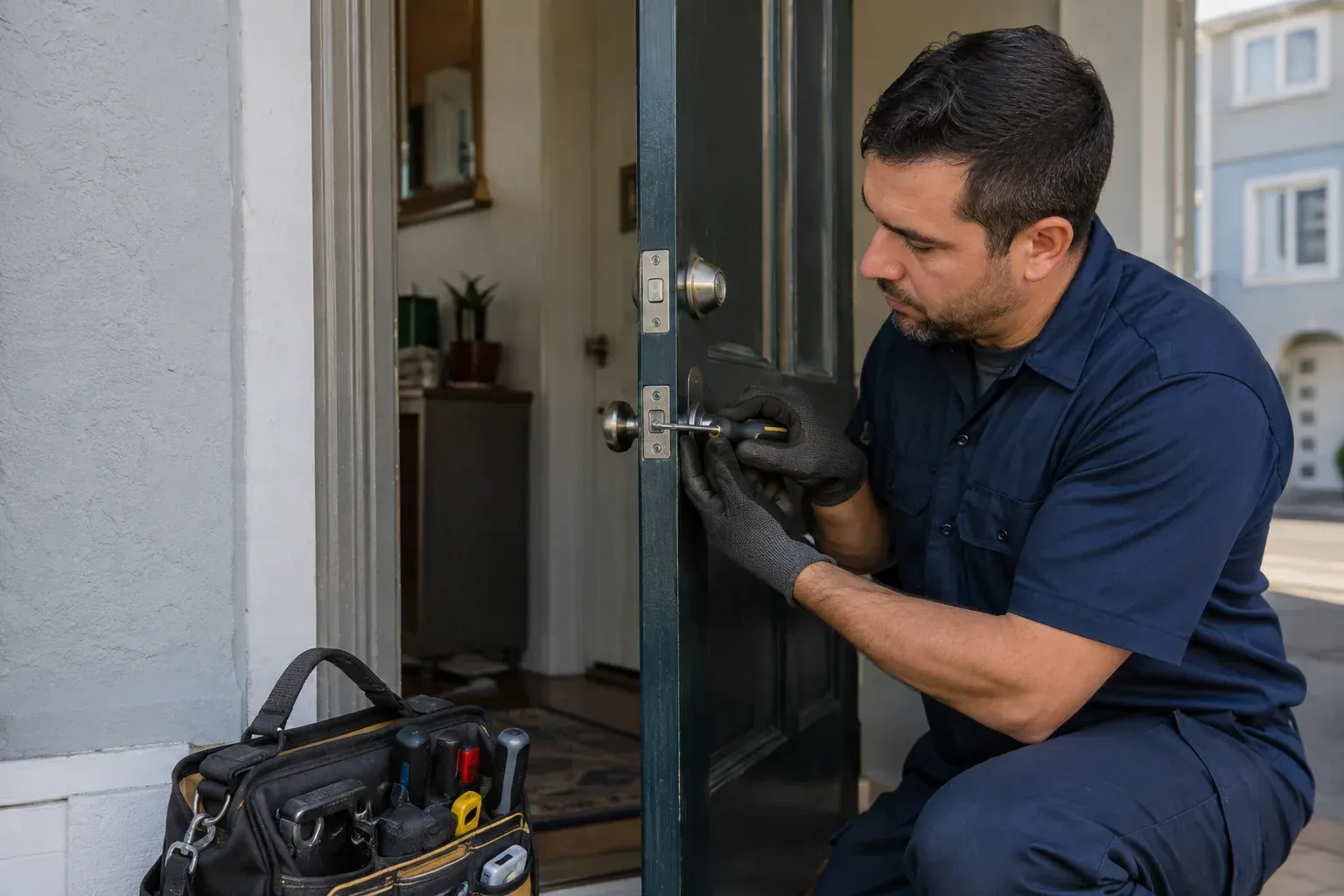
Steel-clad and fibreglass doors, the common insulated entry doors in newer subdivisions, take a deadbolt happily as long as they are cut for it properly. The skin is thin metal or resin over a foam core, often with a wood block at lock height, so the cross bore is made with a hole saw suited to the skin, at low speed, and the edge is finished with a plate rather than a chisel mortise. Solid wood doors in older homes are cut conventionally, with care for splitting at the edge. The locksmith reads the door before drilling and picks the method that leaves a clean opening and a true-running bolt.
Sound familiar?Hamilton
Deadbolt Installation · Hamilton
Scene 1
Deadbolts are built around two dimensions. The cross bore is the large hole through the face of the door, 54 mm on most residential hardware, though some older or imported locks used 38 mm. The backset is the distance from the door edge to the centre of that hole, 60 mm or 70 mm on nearly every door in this part of the world. If a deadbolt is being replaced, both are measured so the new lock lands in the existing holes without a shim or a gap. On a new installation they are chosen to match the knob below, so the two locks line up and any future keypad or smart deadbolt drops straight in.
Scene 2
The finished lock is proved in three stages. With the door open, the thumb-turn and then the key are cycled several times to confirm the bolt throws fully and returns freely. With the door closed, the same tests show whether the bolt clears the strike opening and seats in the pocket; any drag is marked with chalk and the strike is dressed or shifted until the bolt moves with fingertip effort. If the cylinder is being keyed to the household key, it is repinned on the bench and tested from outside with the door closed, and every key that should work is tried before the tools go back in the van.
Scene 3
You leave with the keys sorted, whichever way you chose. If the new cylinder was pinned to your existing key, every ring in the house still works and the new door has simply joined the set. If it was set to a fresh key, you have a small bundle of new keys, cut from the pins rather than copied from a worn original, and a clear idea of which old keys no longer matter. Count them, decide who carries one, and test each in the new bolt before the locksmith leaves. A spare kept with a trusted neighbour or in a small lockbox is worth arranging on the same afternoon.
What shapes the quoteAncaster Heights Locksmith Pros
FeesSame any hour
The bolt should extend at least 25 mm into the frame, which is the standard throw for a dwelling's entrance doors and the length most residential deadbolts provide. Part of the bolt stays inside the door for support while the rest sits in the pocket. A hardened steel insert that spins under a saw blade is a common feature worth having on doors that face a street or laneway.
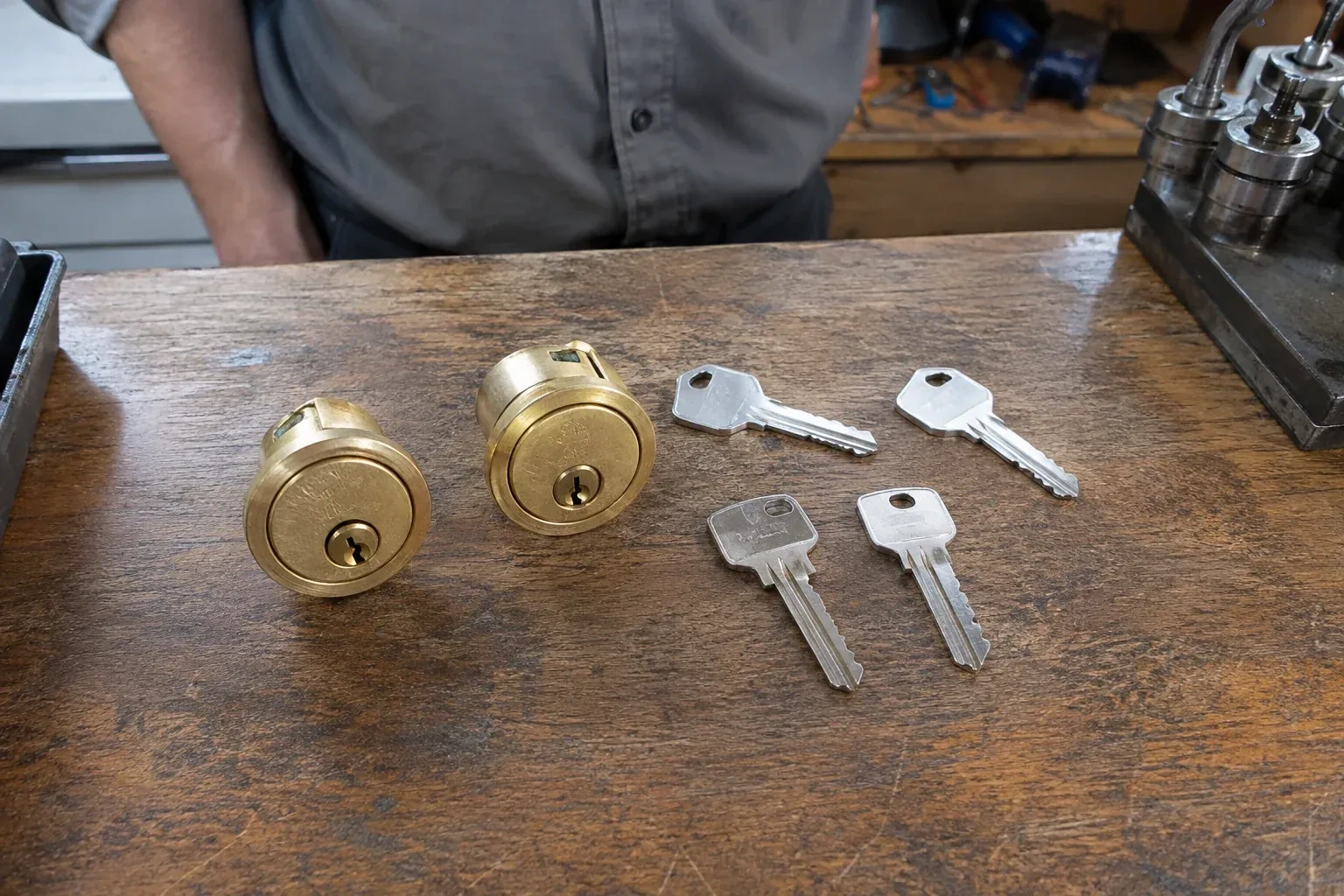
Usually, yes. If the new lock shares a keyway with your existing cylinders, the locksmith repins it on the bench so your current key operates it, and nothing changes on anyone's ring. If the keyways differ, the other doors can be brought onto the new key instead. Say which key you want to keep before the hardware is chosen, because keyway is part of picking the lock.
Yes, on nearly any wood, steel-clad or fibreglass entry door. The locksmith marks a spot above the knob, clamps a jig to the door and bores a cross hole through the face and a smaller hole through the edge, then cuts a pocket and fits a strike on the frame. The main things checked first are the door's thickness, what is inside it at that height and whether glass sits close by.
HamiltonOntario
Deadbolt Installation · Ancaster Heights, Clearview Estates, Dancaster Courts, Greenside Acres, Harmony Hall II, Highland Park Survey, Maple Lane, Maple Lane Annex, Maywood, Mineral Springs, Mohawk Meadows, Nakoma, Oakhill, Parkview Heights, Perth Park, Pinecrest, Pleasant Valley, Spring Valley
Every square is one home in a hundred.
On-site assessment preferred · (289) 203-6954, open 24/7