Skip to content
AncasterHeights Locksmith ProsOpen 24/7 (289) 203-6954
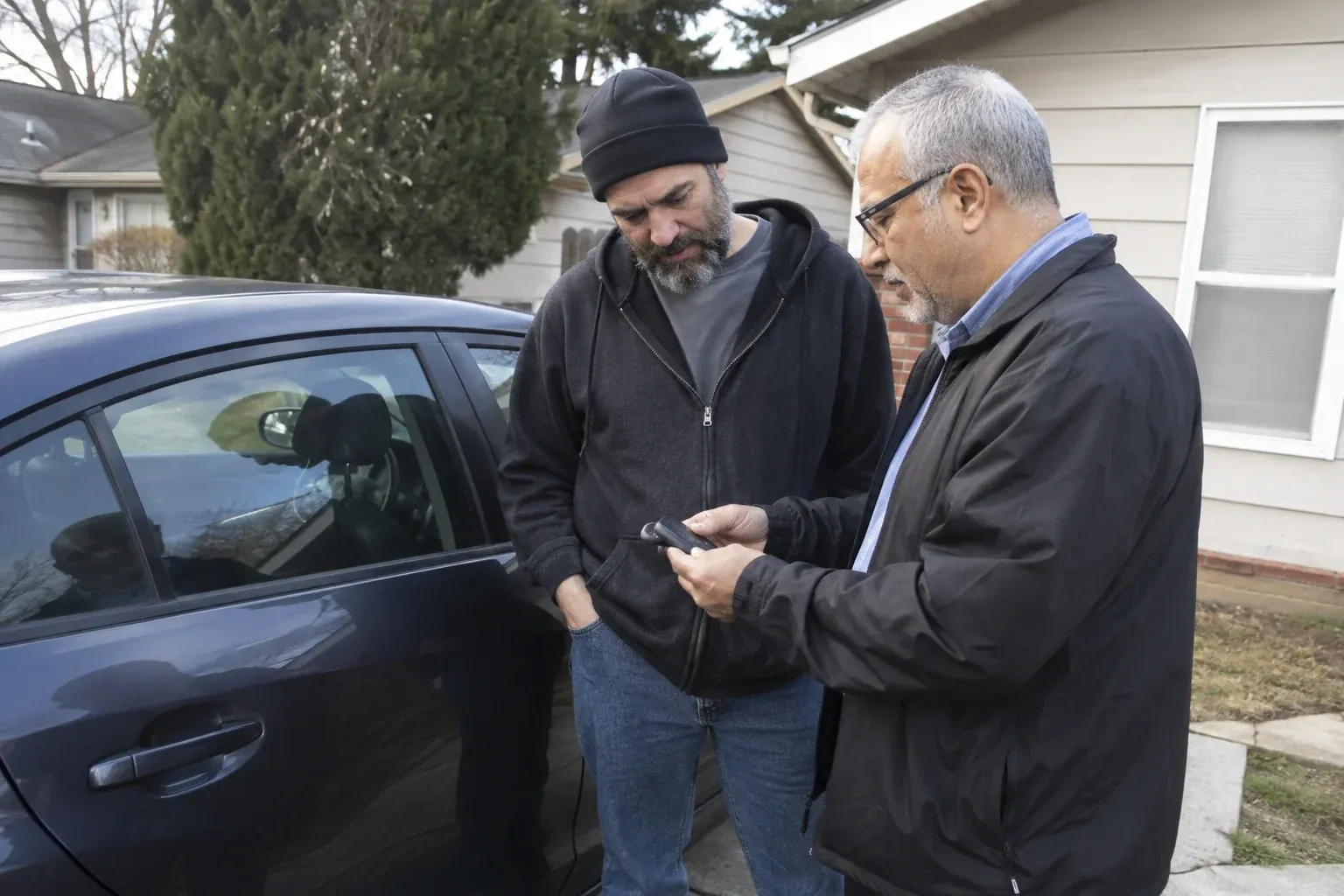
Two adults discussing a key fob beside a parked car. — Car Lockout Service, Hamilton

Car keys · Hamilton

Car Lockout Service

You stepped out at the pump to pay inside, the passenger locked their door out of habit, and the driver's door caught behind you. The engine is off, the keys are in the ignition, and the line of cars behind you is growing.

In plain words

Vehicles have changed, and so have the ways of opening them. An older car with an exposed door cylinder is picked or decoded much like a house lock. A modern car with keyless entry may hide its only cylinder under a cap on the driver's handle, and its doors carry side-airbag sensors and wiring that improvised tools can damage. Push-button cars add an immobiliser and a fob that must be recognised before the engine turns. A car lockout locksmith reads all of this from the make, model and year, then chooses a wedge-and-reach opening, a matched decoder pick, or the mechanical cylinder, whichever leaves the car untouched.

Sound familiar?Hamilton

The call
Your toddler is buckled in the back seat, the doors locked when you shut yours, and your keys are on the front seat beside your phone. It is hot, the child is starting to fuss, and you need help this minute, not a discussion.
NextHow the visit goes

Car Lockout Service · Hamilton

How the visit goes

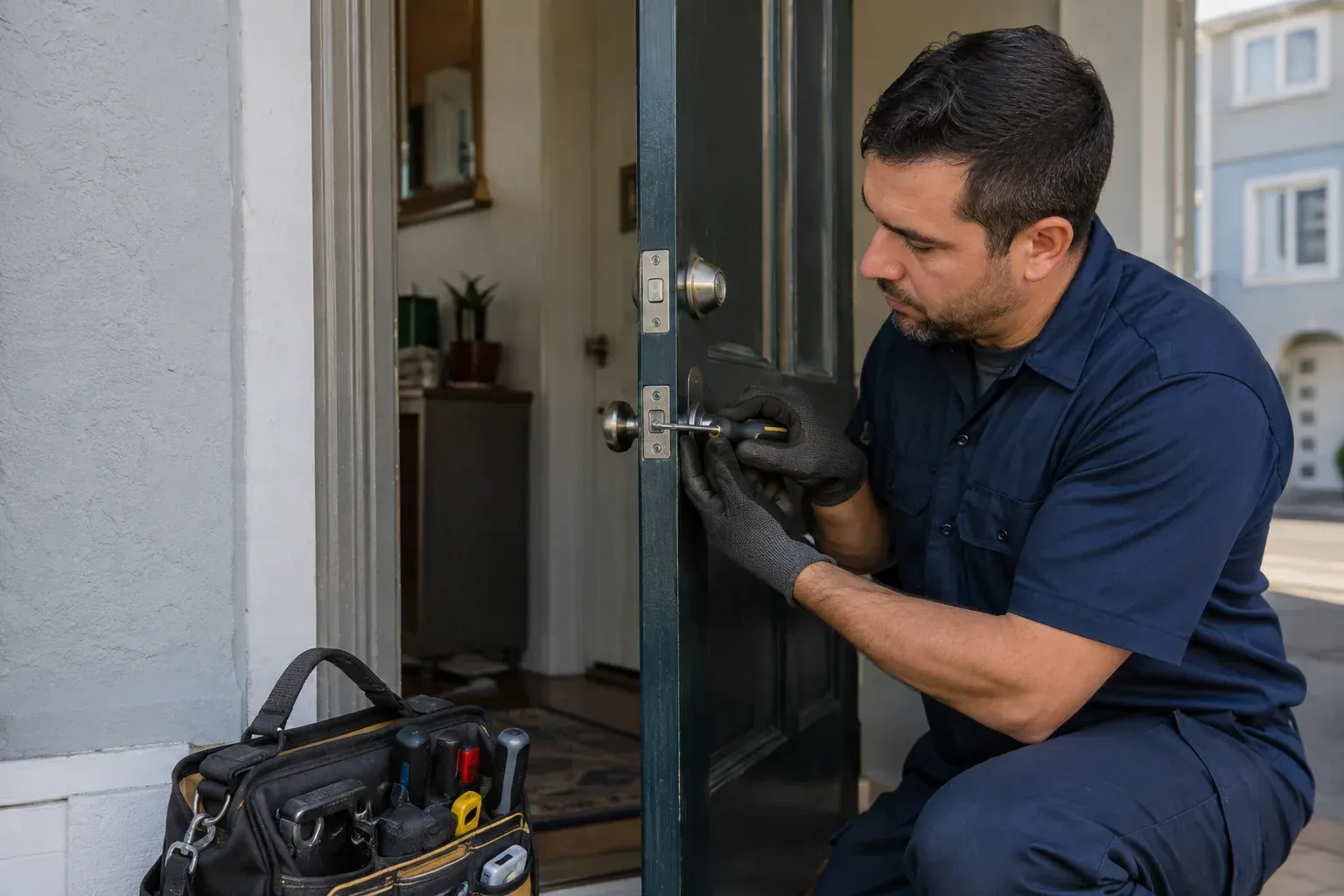
Technician in black gloves holding a screwdriver at the knob lockset of an open dark door, with a tool bag nearby. — Hamilton
  1. Scene 1

    Where the keys actually are

    The second question decides the shape of the visit. Keys on the seat or in the ignition mean a cabin opening only. Keys in the trunk mean the cabin is tried first where a usable release exists, and the trunk cylinder itself is decoded where it does not. A silent fob may mean a flat coin battery, a dead car battery, or a fob left inside a car that locked anyway. Keys lost on a trail, in the snow or with a stolen bag mean that entry is the start and a new key is the finish. A few honest sentences about the last time you saw the keys tell the locksmith what to bring to the door.

  2. Scene 2

    Wedge and reach, done carefully

    On most cars with the keys in the cabin, the opening is a matter of a few millimetres. A protective guard goes over the door edge, a plastic wedge starts a gap at the top rear corner of the frame, and the air wedge takes over, inflated in small pumps so the door flexes evenly rather than at one point. Through the gap goes a padded long-reach tool, guided by eye and sometimes a torch or mirror, to press the unlock switch, tug the interior handle or hook the keys themselves. The wedge is deflated slowly, the guard removed, and the door swings open with its seal and paint as they were.

  3. Scene 3

    The lost key retired for good

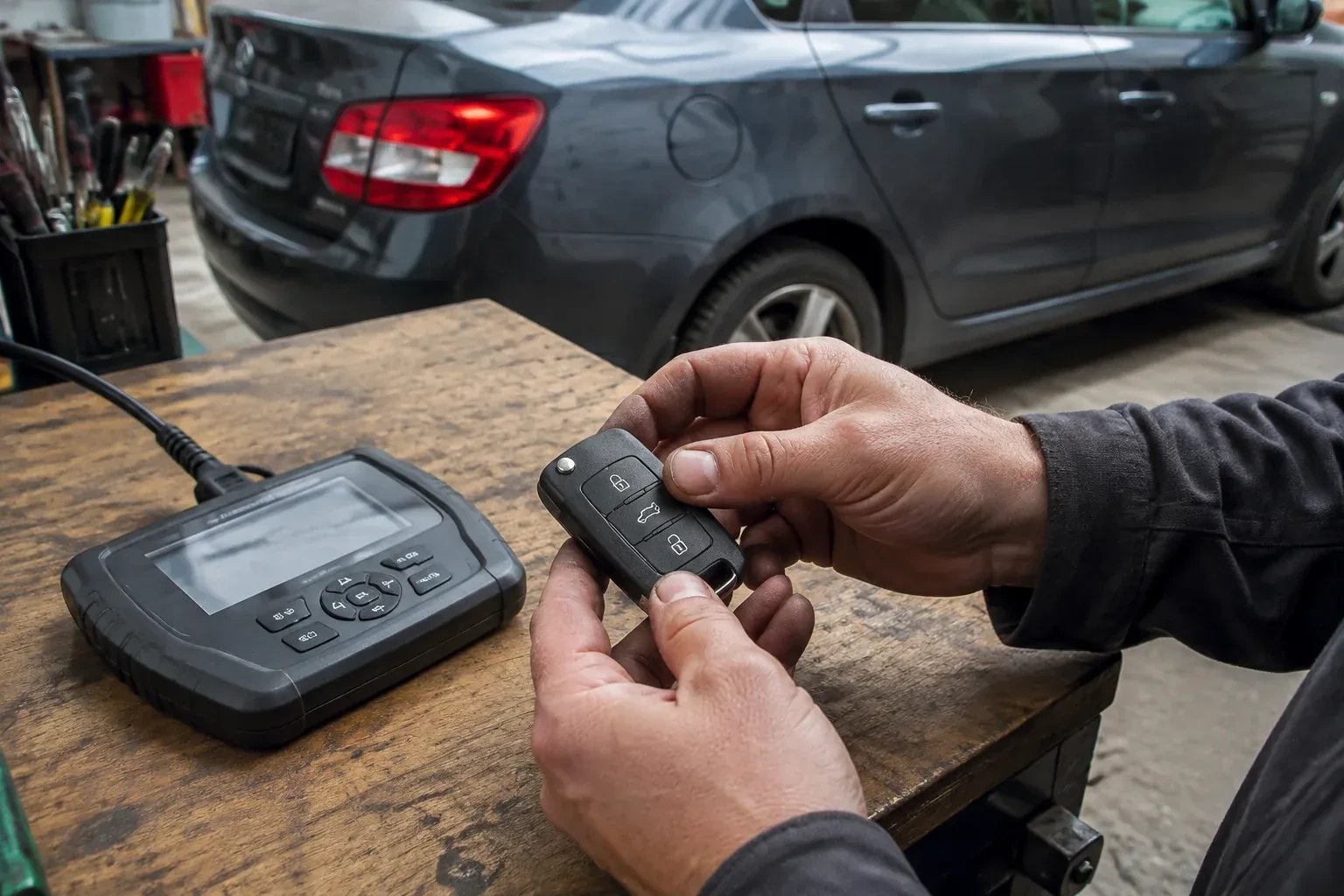
    When a replacement key was made because the original is gone, you leave with more than a key that turns. On vehicles that allow it, the lost key has been erased from the immobiliser, so even if it turns up in someone else's hands it will unlock the doors but not start the engine, and the door cylinders can be recoded later if that matters to you. Count the keys you now hold, note which is programmed and which is a plain blade, and keep the record of the key code somewhere safe, rather than as a clear photo of the cut pattern, since a sharp image alone can be enough to reproduce a working key.

In the van

  • Padded long-reach tool
  • Twelve-volt jump pack
  • Inflatable air wedge
  • Key cutting machine
  • Automotive pick and decoder

What shapes the quoteAncaster Heights Locksmith Pros

Broken key extraction
Drawing a snapped blade out of a door or ignition cylinder before the opening, then cutting a fresh key from the pieces or the code, is quoted as work in addition to the entry.
Commercial, rental or fleet vehicle
Vans with separate cargo locks, rentals that need a written account for the return desk, and fleet vehicles with key records all add small steps that the quote names plainly.
Aftermarket alarm or immobiliser
A car with an added alarm or a second immobiliser may need its own reset or bypass procedure once the door is open, and that extra step is priced as its own line.

FeesSame any hour

Have it ready

Before you call · 0 / 3

(289) 203-6954

Your questions, our answers

Will opening the car damage the paint, the door or the seal?

A professional opening leaves nothing behind. Door-edge guards sit between tools and paint, the air wedge is inflated in small steps so the frame flexes evenly and returns to shape, and the reach tool is padded. Where the car has a door cylinder, a matched pick-and-decoder turns it exactly as a key would. Any mark already present is pointed out before work begins, and the door, glass and seal are checked over at the end.

I have lost my only key. Can a locksmith make a new one at the roadside?

For most cars, yes. After the car is opened, the door cylinder is decoded to read the cuts, or the key code is drawn from the vehicle records against your proof of ownership, and a blade is cut in the van. A transponder key or fob is then programmed through the diagnostic port so the engine will start. Some newer or high-security models need dealer-only parts; you are told that up front rather than after.

The lock is frozen and the door will not budge. What will you do?

Ice is handled gently. Lock de-icer and mild warmth free the cylinder so it turns without force, and a door stuck to its seal is released by pressing along the edge to crack the ice rather than pulling the handle, which can tear the rubber. Hot water is never used because it refreezes and can crack glass. Afterwards the cylinder is lubricated with whatever product the vehicle maker specifies and the seals are treated with silicone.

Hamiltoninformation

HamiltonOntario

Town
Hamilton
In business
18 years
Hours
Open 24/7
Nights, weekends and holidays, same fees
Visits
On-site assessment preferred. Request a visit or call.

2021 census: what it means at the door

Every square is one home in a hundred.

  • 61 in 100 homes · older homes
  • About 61% of homes in Hamilton were built in 1980 or earlier, according to the 2021 Census.Old brass keys wear thin, and a key that has bent for years finally lets go in a cold cylinder. In older housing stock this is a regular call, so the locksmith is ready to extract the piece, check the cylinder and cut a new key from the code.
  • Single-detached houses make up about 56% of homes in Hamilton (2021 Census).Where houses and attached homes share an area, lockouts are as varied as the doors. A porch, a hallway or a shared vestibule each calls for a slightly different approach, and a locksmith used to all three arrives ready for whichever it is.

Source: Statistics Canada, Census Profile

Open Hamilton in Google Maps

On-site assessment

Request a visit.

You stepped out at the pump to pay inside, the passenger locked their door out of habit, and the driver's door caught behind you.

(289) 203-6954, open 24/7.