Sound familiar?Maywood
- The call
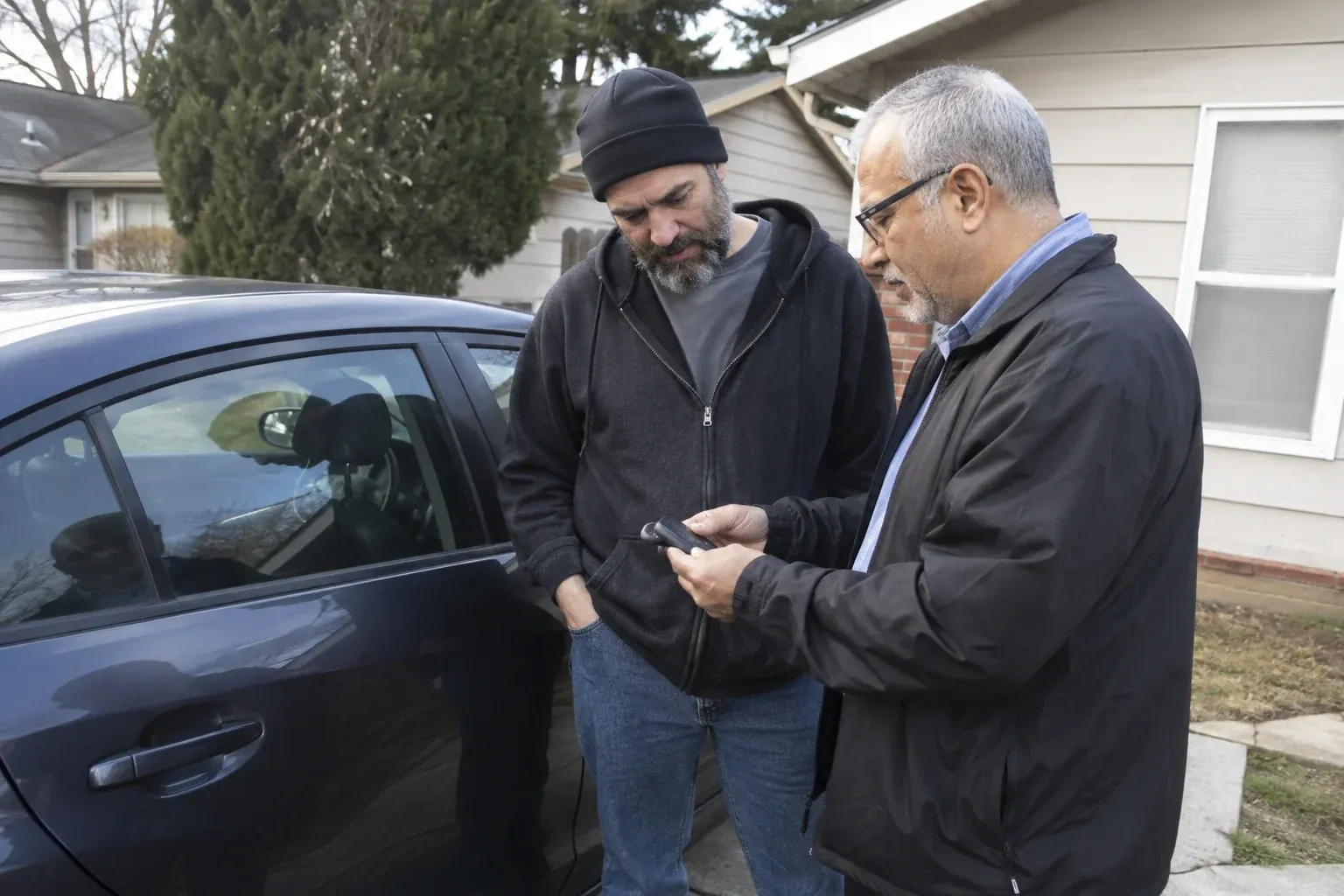
- A scrape sits beside the ignition slot, left by whoever tried the vehicle overnight in the driveway. The key that used to start it now does nothing at all, and the housing itself feels looser than it should.
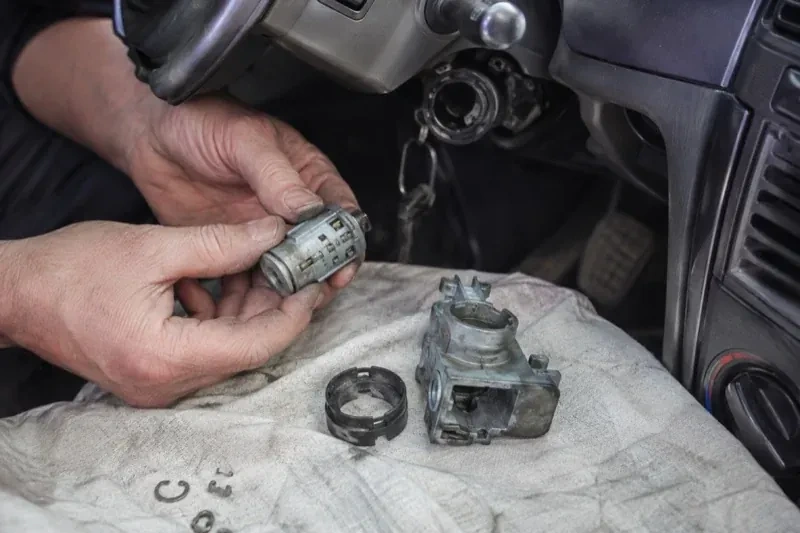
The key slides in fine and turns without any resistance at all, and the dash lights flicker, but nothing catches. No click, no crank, just a key spinning loosely in a slot that used to grab hold of it properly.
Whether the key won't insert, won't turn, turns without engaging anything, or is stuck and refuses to come back out, each version of the symptom points toward a different part of the mechanism. A key that spins loosely usually means something has disconnected inside; a key that won't insert usually means the barrel or the key itself is the obstacle. Naming the exact behaviour on the phone lets the locksmith bring the right tools before ever touching the vehicle.
Sound familiar?Maywood
Ignition Lock Repair · Maywood
Scene 1
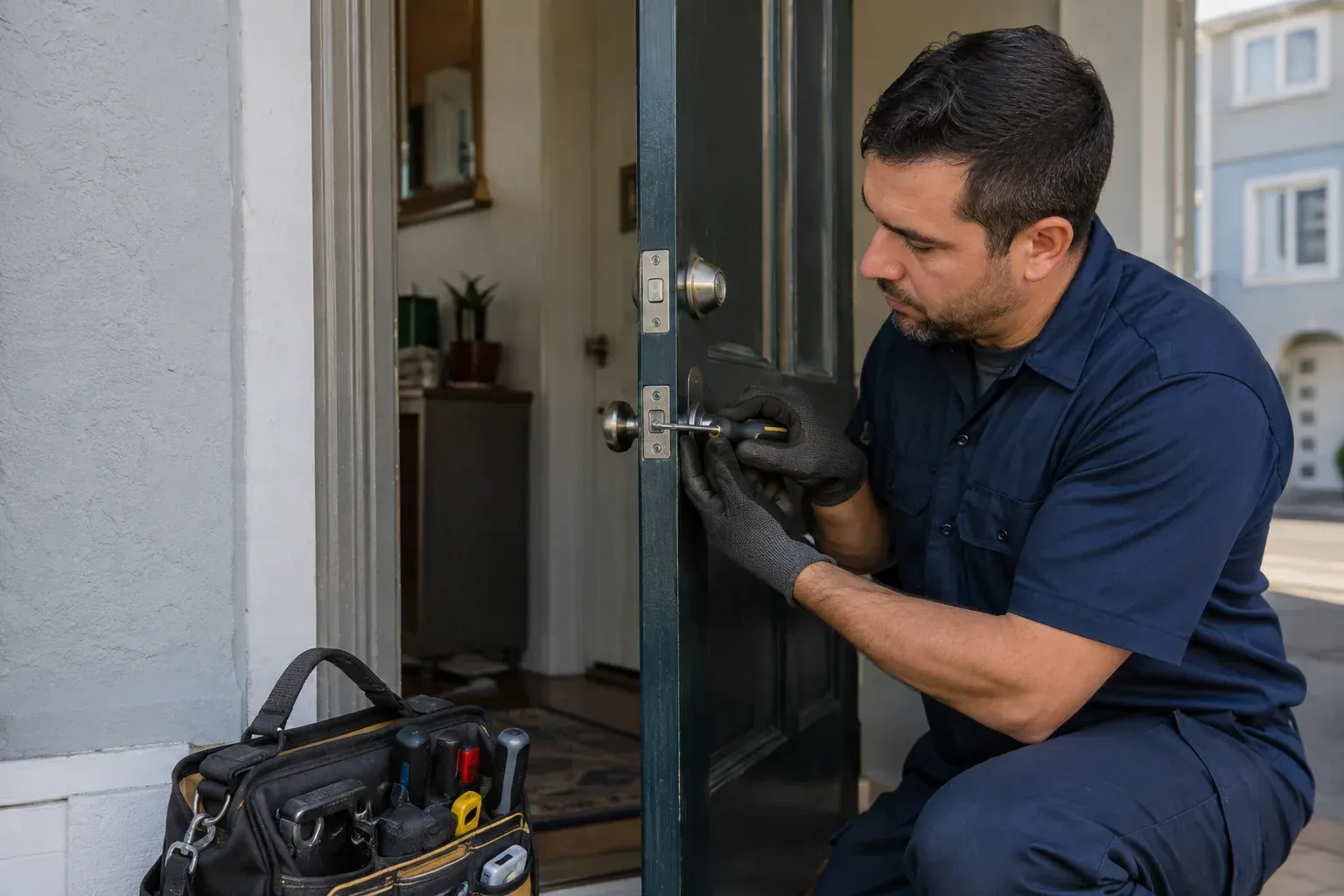
Every vehicle's ignition assembly is put together a little differently: many use a steering-column cylinder in a simple housing or one locked down with shear bolts, while others mount the keyed switch in the instrument panel behind its own trim that has to come off cleanly to avoid marking the dash. The locksmith identifies which arrangement is in front of them before starting, since that decides which tools come out of the case and how the surrounding trim gets handled once the cylinder itself is reached.
Scene 2
The first option is always the least invasive one: cleaning out the keyway, freeing a wafer that has stuck in a raised position, and lubricating the mechanism so the existing cylinder goes back to turning the way it should. This keeps the original hardware on the vehicle and avoids cutting a new key altogether when the fault turns out to be wear or contamination rather than a broken part. Only when this fails to restore normal behaviour does the barrel come out of the column.
Scene 3
After a repair prompted by grit, salt or old grease, the cylinder is dried, cleaned and freshly lubricated, which carries it through a good stretch of the next season's driving. Keeping the key itself clean and dry, and avoiding a heavy keyring that drags on the barrel every time the vehicle starts, both help the repaired mechanism hold up through the weather that caused the original problem in the first place.
What shapes the quoteAncaster Heights Locksmith Pros
FeesSame any hour
Sometimes, and sometimes the ignition is only part of the picture. If the barrel is not turning the switch through its positions, freeing or replacing it can resolve the whole problem. If the barrel turns properly and the vehicle still stays silent, the remaining cause sits elsewhere in the electrical or fuel system, and that half of the question is named clearly rather than guessed at.
If the doors and trunk already shared a key with the ignition, that arrangement is kept in mind throughout the repair and preserved wherever the vehicle's hardware allows it. Where a new cylinder or new pinning is involved, the other locks are tested against the new key before the visit ends, so nothing is left running on two different keys by accident.
Yes, older mechanical ignitions are generally straightforward to service, since there is no transponder chip or immobilizer layer to work around. Worn wafers, a tired spring, or a housing that has loosened over the years are addressed directly, and a fresh key is cut from the current pinning or the vehicle's key code once the barrel itself has been sorted out.
HamiltonOntario
Ignition Lock Repair · Hamilton, Ancaster Heights, Clearview Estates, Dancaster Courts, Greenside Acres, Harmony Hall II, Highland Park Survey, Maple Lane, Maple Lane Annex, Mineral Springs, Mohawk Meadows, Nakoma, Oakhill, Parkview Heights, Perth Park, Pinecrest, Pleasant Valley, Spring Valley
Every square is one home in a hundred.
On-site assessment
The key slides in fine and turns without any resistance at all, and the dash lights flicker, but nothing catches.
(289) 203-6954, open 24/7.
On-site assessment preferred · (289) 203-6954, open 24/7