Skip to content
AncasterHeights Locksmith ProsOpen 24/7 (289) 203-6954
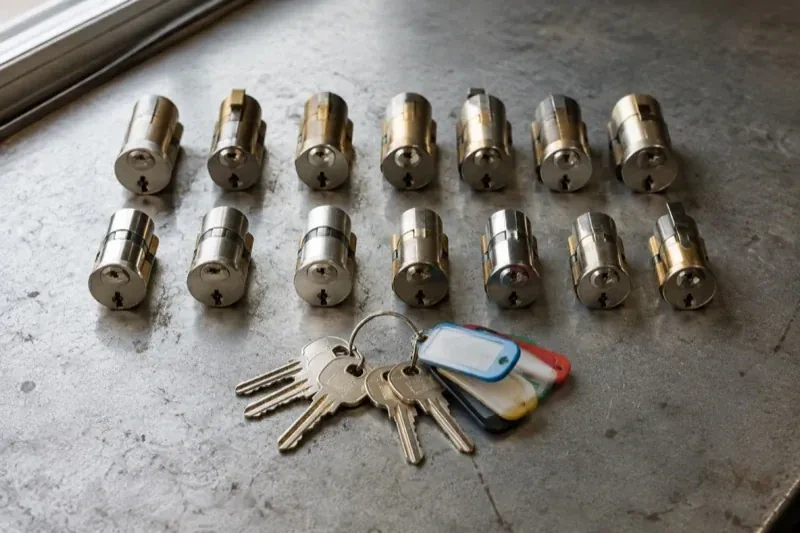
Two rows of lock cylinders on a metal surface with keys and colored key tags in front. — Master Key System Design, Harmony Hall II

Commercial · Harmony Hall II

Master Key System Design

After a busy shift the manager counts the keys coming back in and loses track of who still has one. The walk-in cooler, the liquor cage and the office desk are all supposed to be separate, but the same battered key seems to fit two of them.

In plain words

Many commercial properties end up with keys copied from other keys over years of staff changes, until nobody can say with confidence what a given key actually opens. Master key system design starts from the opposite direction: an approved list of roles and openings comes first, and the keying follows it. Doors that genuinely need to share access are grouped under a sub-master; doors that do not stay on their own key. Once the hierarchy is agreed, the cylinders are pinned to match it, tested lock by lock, and handed over with a plain record so the business always knows which key belongs where.

Sound familiar?Harmony Hall II

The call
On the warehouse floor, a shift supervisor's key opens the loading dock, the tool crib and the manager's office, though only the dock is really part of the job. Nobody planned it that way; the key was simply copied from whichever one was closest at hand.
NextHow the visit goes

Master Key System Design · Harmony Hall II

How the visit goes

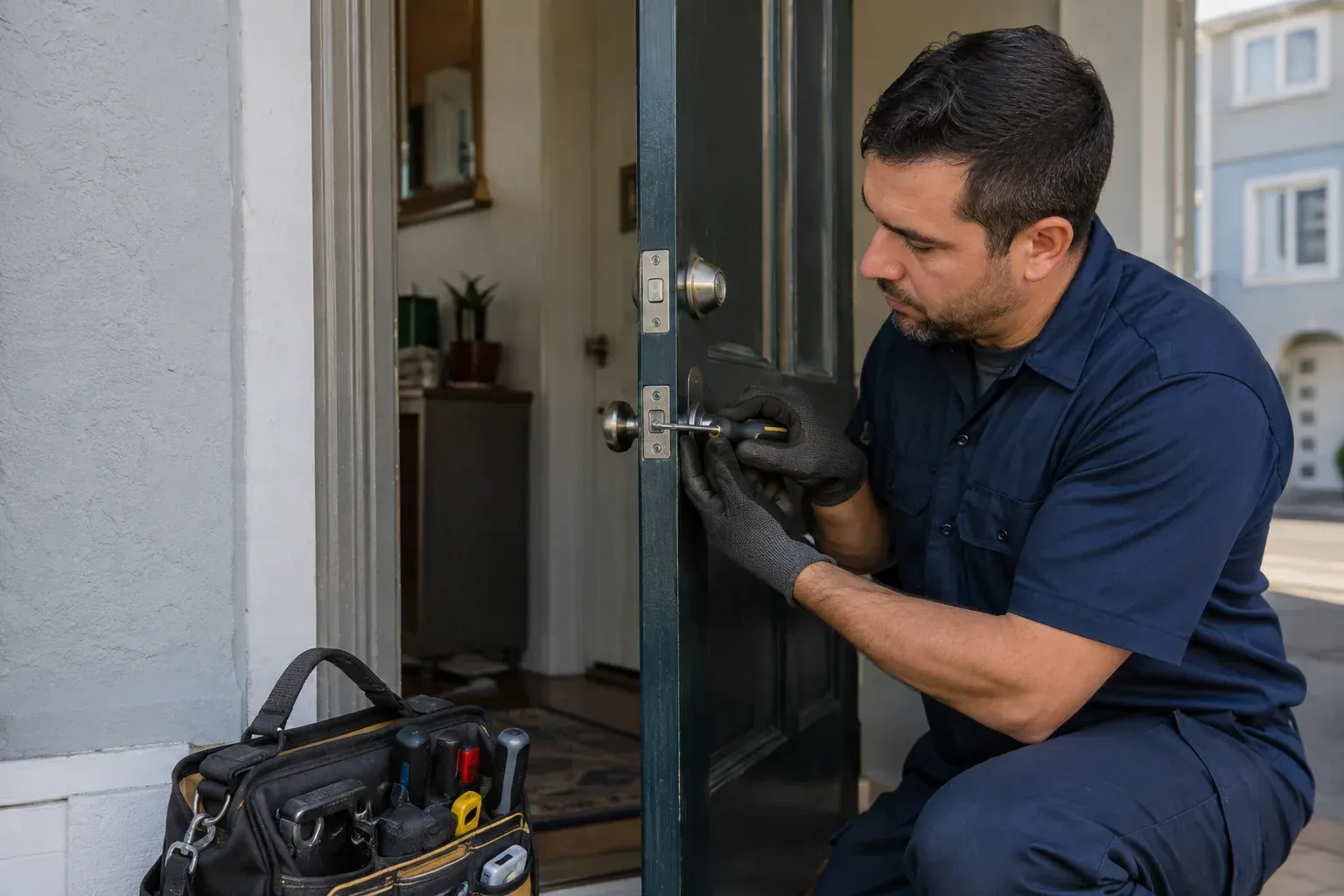
Technician in black gloves holding a screwdriver at the knob lockset of an open dark door, with a tool bag nearby. — Harmony Hall II
  1. Scene 1

    What is already on the doors

    Every door on the property is walked and logged: the cylinder brand or keyway, whether it is a knob, lever, deadbolt or mortise case, its condition, and which doors currently share a key by accident rather than by design. This inventory decides how much of the existing hardware can join a new hierarchy without modification and how much needs replacing to fit cleanly into the planned levels. Skipping this step is how master key projects end up half-finished, with some doors on the new system and others quietly left on whatever key they always had.

  2. Scene 2

    Handling a lost key discovered mid-project

    If a key turns up missing or unaccounted for while the assessment is underway, the affected level is dealt with before the rest of the design continues: the doors that key can reach are identified from existing records or, where none exist, from a physical walk of the property, and those cylinders are prioritized for repinning ahead of the rest of the schedule. Folding this into the same visit avoids a second project later to close a gap that was already known about.

  3. Scene 3

    A building that finally matches its own org chart

    The most visible change is often the simplest one: the level of key someone carries now matches the role they actually hold, instead of matching whatever happened to be handed down or copied over the years. Walking the building afterward, each door answers to keys that were deliberately assigned to it, and the chart in the office explains every one of those decisions to anyone who asks about it.

In the van

  • Cylinder pinning kit
  • Compatible replacement cylinders
  • Key cutting machine
  • Restricted or standard key blanks
  • Plug follower and key gauge

What shapes the quoteAncaster Heights Locksmith Pros

Administrator training and handover time
Walking the named administrator through the chart, the issuance process and how to handle a future lost key or new hire takes a defined amount of time on the day of handover, and a more detailed walkthrough for a larger, multi-level system takes longer than a simple one.
Keyway chosen: standard or restricted
A restricted or patented keyway costs more in blanks and administration than a standard keyway, since duplication is controlled through the manufacturer's authorized record rather than cut anywhere. Higher-risk doors, such as records or cash rooms, often justify that additional control; lower-risk doors may not.
Testing scope before handover
Testing every cylinder individually and then testing each master and sub-master across its full group takes time proportional to how many doors and levels exist. A larger hierarchy with more levels to verify against more doors adds to that testing time.

FeesSame any hour

Have it ready

Before you call · 0 / 3

(289) 203-6954

Your questions, our answers

What happens if a department splits or a business reorganizes?

The existing chart is the starting point rather than a blank page. Doors that move to a new department are reassigned within the existing hierarchy where the cylinders and platform allow it, and only the affected levels are touched. A reorganization is usually an adjustment to the record, not a reason to rebuild the whole system from the ground up.

Who should hold the top-level master key?

As few people as the business can genuinely operate with. Every additional holder is another way a full-access key can be lost, borrowed or copied without anyone deciding that should happen. A useful test during design is asking, for each proposed holder, whether they need to open every single door on the property or only a defined group; the second answer usually points to a sub-master instead.

Should I keep spare blanks or unpinned cylinders on hand?

It depends on how the keyway is controlled. With a restricted system, spare blanks are typically held by the locksmith against the authorized record rather than stored loosely on site, since that is what keeps duplication contained. With a standard keyway, keeping a few spare cylinders of the same platform can simplify a later addition, though it is not required.

Harmony Hall IIinformation

HamiltonOntario

Town
Harmony Hall II, Hamilton
In business
18 years
Hours
Open 24/7
Nights, weekends and holidays, same fees
Visits
On-site assessment preferred. Request a visit or call.

2021 census: what it means at the door

Every square is one home in a hundred.

  • 61 in 100 homes · older homes
  • About 61% of homes in Hamilton were built in 1980 or earlier, according to the 2021 Census.Where most homes were built decades ago, doors often still carry their original mortise locks and brass knobs. That hardware can usually be cleaned, re-sprung and kept in service, with a modern deadbolt added above it for strength without losing the look.
  • Single-detached houses make up about 56% of homes in Hamilton (2021 Census).Mixed housing means a locksmith sees a bungalow in the morning and a condo tower in the afternoon. The stocked van has house-door deadbolts, suite-door cylinders and the finishes for each, so neither kind of customer waits for a second visit.

Source: Statistics Canada, Census Profile

Open Harmony Hall II in Google Maps

On-site assessment

Request a visit.

After a busy shift the manager counts the keys coming back in and loses track of who still has one.

(289) 203-6954, open 24/7.