Sound familiar?Pleasant Valley
- The call
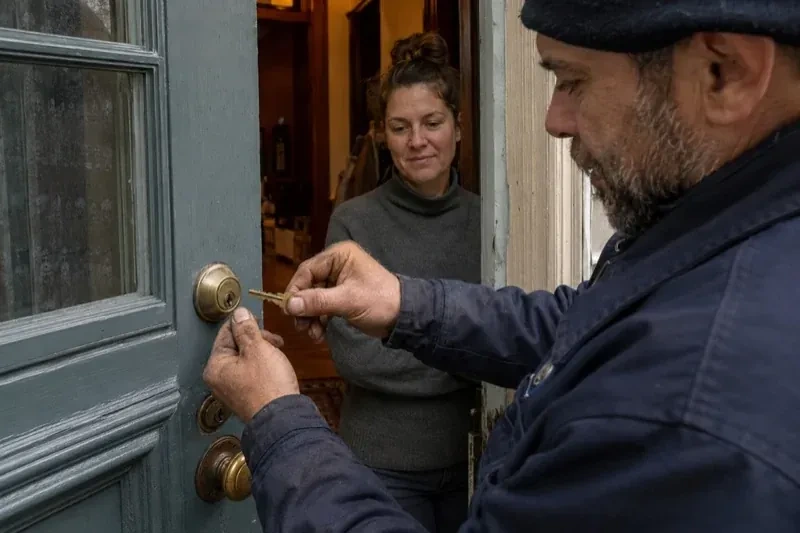
- You are inside, the deadbolt is thrown, and the thumb-turn will not budge. It moved a little last week with some effort. Now the door you walk through every day is a wall, and you need it open.
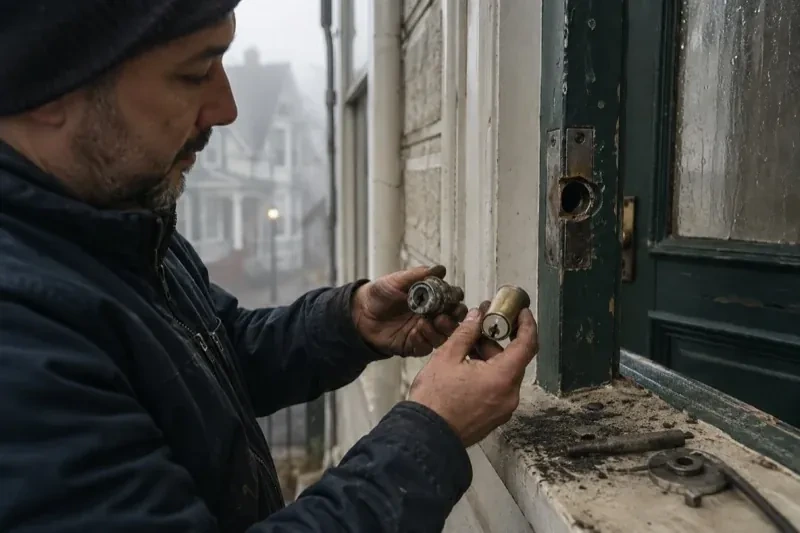
Every time you pull the key out of the side door it comes away gritty. The lock has been sticky since the salt trucks started running, and today it has gone from sticky to solid, with the bolt still thrown.
Most seized locks can be saved, and keeping your existing hardware is the aim. A cylinder that has stopped turning is usually recoverable with cleaning and fresh internal parts. A failed tailpiece is a small component swapped without touching the rest of the lock. A bolt bound by the door needs adjustment, not new hardware. Replacement is the answer for a plug or shell that is worn, damaged or hollowed out by corrosion beyond what cleaning and parts can fix, and then the new cylinder is matched to your keyway and finish and, where possible, keyed to the key already in your pocket.
Sound familiar?Pleasant Valley
Seized & Jammed Lock Opening · Pleasant Valley
Scene 1
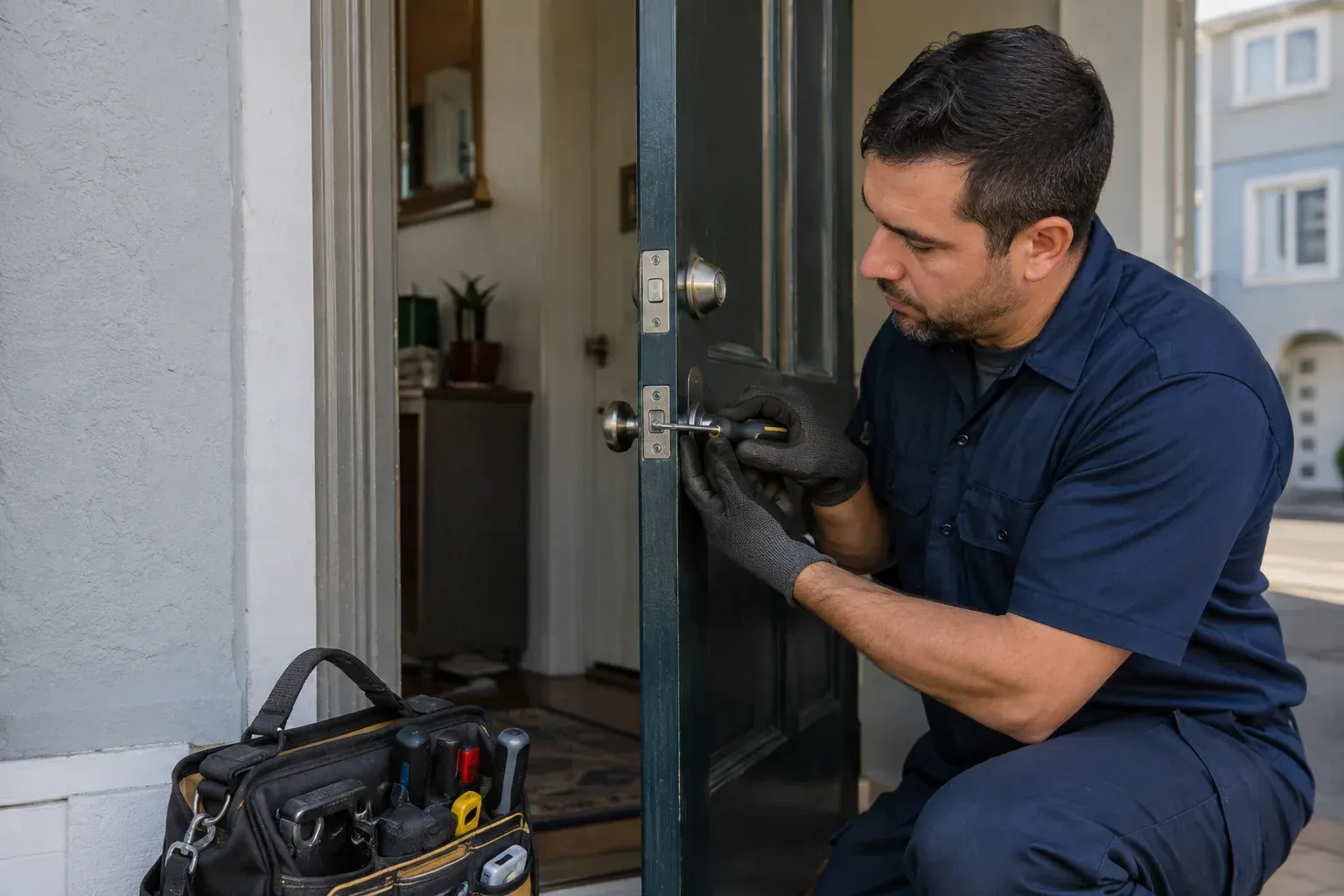
The first check is the person, not the lock. The locksmith confirms that whoever is asking for the opening is entitled to it, usually with photo identification that matches the address, or a lease, deed, property-management record or a manager who can vouch for you. For a business, a key holder or the person named on the lease is enough. If everything that proves it is behind the jammed door, the check is finished once you are inside and before the locksmith leaves. Then a short walk to the other entrances: a second door on the same key gives a comparison lock and sometimes a gentler way in.
Scene 2
The job is finished with testing rather than with the last screw. The bolt is thrown and drawn back with the door open to prove the lock itself, then with the door closed to prove the door and strike, then from the inside with the thumb-turn or lever. Every key you hold is tried, including the spare from the drawer. If the door is a main exit, the locksmith confirms it opens from inside with one motion and no key. Any hardware that was adjusted is cycled a dozen times to make sure it stays put, and the finish is wiped clean of cleaner and lubricant.
Scene 3
If the door was the cause, the hinges, strike and seal have been set so the bolt has room. Keeping it that way is a seasonal habit: each spring and fall, try the lock with the door closed and no pressure on it, and snug the hinge and strike screws if the door has begun to drop. Wood keeps moving with humidity, so a door that swells in August may need a touch on the strike in September. A door that suddenly needs a push to lock is telling you early, while the fix is still a screwdriver and not a seized bolt.
What shapes the quoteAncaster Heights Locksmith Pros
FeesSame any hour
Try the key while gently pushing, pulling and lifting the door. If it frees up in one position, the bolt is being pinched by the frame and the door is the cause. If nothing changes, look at the key: does it go fully in and refuse to turn, or spin freely? The first points to the cylinder, the second to the tailpiece behind it. Tell the locksmith which you found and the right parts come in the van.
Say what the key does: refuses to turn, spins without effect, or works only when the door is pushed or pulled. Name the lock type if you can, whether it is a deadbolt, knob, lever or an old mortise lock, and which side of the building the door faces. Mention recent weather, any spray that went into the keyway, any other door you can use, and whether anyone is inside. That short list decides the tools that come.
It usually points to the mortise case rather than the cylinder, and it is a common complaint on commercial doors. Inside the case a return spring, a worn hub, or another part of the latch's drive path can have failed, so the lever moves without driving the latch. The locksmith gets the door open, draws the case out of the door edge, replaces the worn part, cleans and greases the contact points and refits everything, then tests lever, key and thumb-turn together.
HamiltonOntario
Seized & Jammed Lock Opening · Hamilton, Ancaster Heights, Clearview Estates, Dancaster Courts, Greenside Acres, Harmony Hall II, Highland Park Survey, Maple Lane, Maple Lane Annex, Maywood, Mineral Springs, Mohawk Meadows, Nakoma, Oakhill, Parkview Heights, Perth Park, Pinecrest, Spring Valley
Every square is one home in a hundred.
On-site assessment
Every time you pull the key out of the side door it comes away gritty.
(289) 203-6954, open 24/7.
On-site assessment preferred · (289) 203-6954, open 24/7